How AI Product Image Generators Are Changing Visual Content for Small E-Commerce Brands
Small e-commerce brands do not usually lose customers because their products are bad. More often, they lose attention because their visuals cannot keep up with the speed of online selling.
A product may need one image for a marketplace listing, another for a seasonal campaign, another for a social post, another for a paid ad, another for an email banner, and several more for testing different audiences. For a small team, producing all of these assets can become a constant bottleneck.
Traditional product photography still matters. Clear, accurate product photos are essential for trust. But the modern content cycle now asks brands to do more than show what a product looks like. They need to show how it fits into a lifestyle, how it solves a problem, how it looks in different settings, and why someone should stop scrolling.
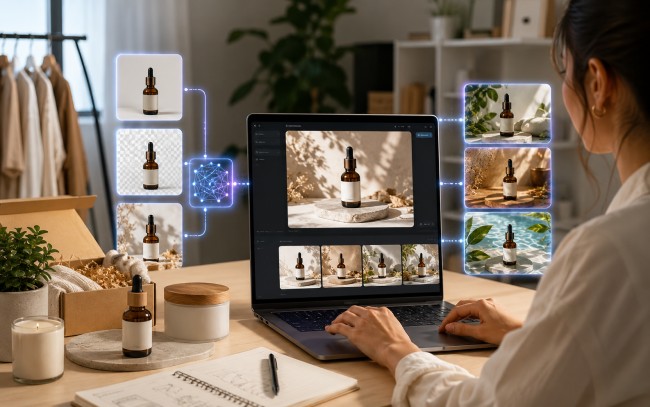
This is why tools such as an AI product image generator are becoming more relevant for small e-commerce teams. The value is not simply that AI can create a nice picture. The bigger value is that it helps brands produce more visual variations, test creative ideas faster, and turn basic product assets into marketing content without rebuilding every campaign from zero.
For small brands, this can change how visual content is planned, produced, and tested.
Product Images Are No Longer Used in One Place
In the past, a product photo mainly had to serve a product page, catalogue, or advertisement. Today, the same product may appear across a much wider set of channels.
A candle brand may need clean product photos for its store, lifestyle images for Instagram, gift-focused visuals for holiday campaigns, warm home scenes for Pinterest, and simple promotional graphics for email. A skincare brand may need ingredient-focused visuals, routine shots, comparison images, bundle graphics, and short-form ad concepts. A home goods seller may need room setting images, close-up texture shots, seasonal styling, and marketplace-ready photos.
This means the product image is no longer a single asset. It is the starting point for a larger visual system.
That creates pressure for small teams. They may not have an in-house photographer, designer, stylist, and ad creative team. Even when they can afford one shoot, they may not be able to reshoot every time they need a new background, campaign angle, or seasonal look.
AI image generation helps because it can support the space between original product photography and full creative production. It gives brands a way to explore visual directions before committing time and budget.
The Real Problem Is Visual Variation
Most small e-commerce teams do not need one perfect image. They need many useful images.
This is especially true for paid advertising and social media. One product image may perform well with one audience and poorly with another. A clean studio image may work on a marketplace, while a lifestyle image may work better on Instagram. A close-up may sell quality, while a contextual image may sell use case.
The challenge is that creating each variation manually can be slow. Changing the background, styling the product differently, testing seasonal themes, or adapting an image for another platform often requires extra design work.
AI can help teams create and evaluate variations faster. A brand can test whether a product feels more appealing in a minimalist setting, a cozy home environment, a holiday gift scene, or a clean white-background product layout. It can create early concepts before a real shoot, or produce campaign assets from existing product visuals.
The goal is not to replace every creative decision with AI. The goal is to reduce the friction between having an idea and seeing whether that idea might work.
AI Helps Brands Move From One Asset to Many
A strong e-commerce visual workflow often starts with a reliable product photo. From there, the brand needs to create context.
For example, a simple product image can become:
- a lifestyle scene for a social campaign;
- a seasonal promotional image;
- a visual for an email announcement;
- a marketplace-friendly product graphic;
- a concept image for a new ad angle;
- a background variation for audience testing;
- a bundle or gift set presentation.
This is where AI becomes practical. Instead of asking a designer to manually create every concept from scratch, the team can use AI to explore different directions quickly. Some outputs may become final assets. Others may simply help the team decide what kind of shoot, campaign, or design direction is worth pursuing.
That matters because creative testing is no longer only for large brands. Smaller sellers also need to know which visuals attract attention, explain value, and support conversion.
A small jewellery brand might test whether customers respond better to elegant close-ups or lifestyle images on a dressing table. A kitchenware seller might compare clean product shots with images showing the item in use. A pet product brand might experiment with playful, warm, or practical visual styles.
These tests do not need to be complicated. They just need enough visual variety to show what direction customers care about.
Better Visuals Can Reduce Buyer Uncertainty
Product images are not just decoration. They help customers answer practical questions.
What size is the product?
Where would I use it?
Does it look premium or casual?
Is it suitable as a gift?
Does it fit my style?
What problem does it solve?
When a product page only shows one or two basic images, customers may hesitate. They may like the product but not understand how it fits into their life. That hesitation can lower conversion, especially for products where texture, setting, scale, or use case matters.
AI-generated visual variations can help brands show more context. A storage product can appear in a small apartment. A wellness product can appear in a calm evening routine. A fashion accessory can be shown with different outfit moods. A food packaging product can appear in a café, takeaway counter, or picnic scene.
Of course, brands must use AI responsibly. Product visuals should not misrepresent size, material, quantity, or included accessories. AI should support clearer storytelling, not create false expectations.
The most useful AI product images are the ones that help customers understand the product more accurately and imaginatively at the same time.
AI Should Support, Not Replace, Brand Direction
One mistake small brands can make is treating AI as a shortcut for all creative thinking. If every prompt simply asks for “a beautiful product image,” the results may look polished but generic.
A stronger approach begins with brand direction.
Before using AI, a brand should know what kind of visual world it wants to create. Is the product meant to feel premium, playful, practical, minimal, handmade, eco-friendly, youthful, or professional? Should the image feel calm, energetic, luxurious, natural, or functional?
AI is more useful when the brand gives it a clear creative role.
For example, instead of asking for “a product image for skincare,” a better direction might be: “Create a soft, natural bathroom shelf scene for a gentle skincare product aimed at sensitive skin customers.” Instead of asking for “a holiday product photo,” a better direction might be: “Show this candle as a warm, understated gift for a cozy winter home.”
The more clearly the brand defines the customer, use case, and visual mood, the better AI can help.
This is why AI image generation is not only a production tool. It is also a creative thinking tool. It forces teams to describe what they want the customer to feel and understand.
A Practical AI Product Image Workflow
Small e-commerce teams can start with a simple workflow.
First, collect the core product information: product type, main benefit, target customer, key features, materials, colors, size, and use case.
Second, define the channel. A product page may need clarity and accuracy. A social post may need emotion and stopping power. An ad may need a clear hook. An email banner may need a seasonal or promotional angle.
Third, decide the visual purpose. Is the image meant to show scale, explain a use case, create desire, compare options, highlight texture, or support a campaign theme?
Fourth, generate several controlled variations. These might include different backgrounds, settings, moods, seasons, or customer situations.
Fifth, review the results carefully. Remove anything that misrepresents the product. Keep images that clarify value or inspire better campaign ideas.
Finally, test the best options. Use them in ads, emails, social posts, product pages, or creative briefs, then compare engagement and conversion signals.
This workflow keeps AI from becoming random image production. It makes it part of a repeatable visual content process.
Where AI Product Images Are Most Useful
AI product image generation is especially useful in areas where visual demand changes often.
Seasonal campaigns are one example. A product may need different visuals for spring, summer, back-to-school, Black Friday, Christmas, or Valentine’s Day. Reshooting for every season can be costly, but AI can help generate campaign concepts and supporting assets.
Audience testing is another strong use case. The same product can be shown in different environments for different buyer segments. A water bottle might be positioned for gym users, office workers, students, or travelers. A notebook might be shown as a study tool, work accessory, gift item, or creative journal.
Product launches can also benefit. Before investing in a full shoot, a brand can explore different visual directions and decide which ones match the product story best.
AI can also help revive older products. A seller may already have a product that performs steadily but lacks fresh creative. New image variations can make the product feel more relevant without changing the product itself.
What Brands Should Be Careful About
AI product images need quality control. A beautiful image is not useful if it creates confusion or damages trust.
Brands should check whether the generated image accurately represents the product. Does the size look correct? Are the colors close enough? Are the materials shown honestly? Are there extra items that could make customers think they are included? Does the background distract from the product?
There are also brand consistency concerns. If every image has a different style, the store can start to feel fragmented. AI makes it easy to create more visuals, but more is not always better. The strongest brands still need consistent direction.
Legal and platform rules also matter. Marketplaces and ad platforms may have their own requirements for product images, edited images, claims, or misleading visuals. Teams should review AI-assisted assets before publishing them.
The best approach is to treat AI images as part of a professional content workflow. They should be reviewed, refined, and used with intention.
AI Changes the Economics of Creative Testing
For small brands, one of the biggest advantages of AI is that it lowers the cost of creative exploration. In traditional workflows, testing five visual directions might require a photoshoot, props, editing time, and design resources. With AI, a team can explore several directions earlier and faster. Not every output has to be published. Some outputs can simply help the team make better creative decisions. This changes the way small brands compete.
Large companies may still have bigger budgets, but smaller teams can now test ideas with less friction. They can respond to seasonal moments, launch campaigns faster, and learn which visuals resonate before spending more money. The competitive advantage is not just speed. It is learning.
A brand that tests more visual ideas can understand customers better. It can see which use cases attract attention, which moods fit the product, and which images help people understand value.
From Product Photography to Visual Content Systems
Product photography will remain important. Customers still need accurate images, clear details, and trustworthy presentation. But e-commerce visual content is becoming broader than photography alone.
Brands now need a system that can create, adapt, test, and refresh product visuals across many channels. AI image generation can support that system by making visual experimentation faster and more accessible.
For small e-commerce brands, this can be a major shift. They no longer have to wait until they can afford a large creative team to test better visual ideas. They can begin with the assets they already have, use AI to explore new contexts, and build stronger campaigns from there.
The brands that benefit most will not be the ones that generate the most images. They will be the ones that use AI to make clearer, more relevant, and more persuasive product visuals.
In online selling, attention is limited. The right image does more than show a product. It helps a customer imagine why the product belongs in their life.