How Underground Hard Rock Extraction Operations Differ From Surface Operations
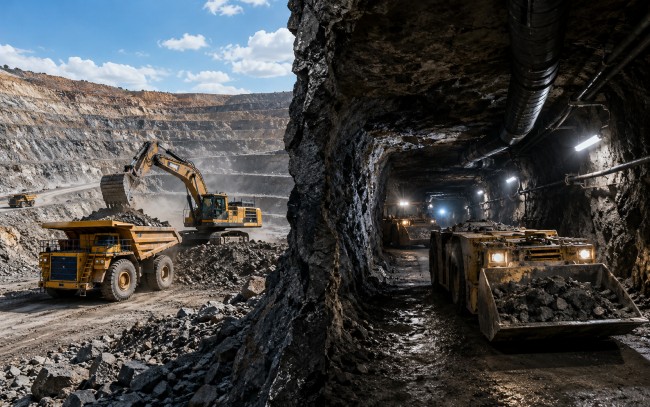
The gap between surface and underground extraction operations is wider than it looks from the outside. Both involve moving large volumes of material, both depend on heavy machinery, and both present the kind of engineering challenges that separate well-run operations from struggling ones. But the operating environment underground changes almost everything about how machinery is designed, deployed, and maintained, and those differences compound in ways that surface-focused thinking doesn’t always account for.
The Operating Environment Is Fundamentally Different
Surface extraction operations work in open air with relatively unlimited space. Equipment can be sized generously, operators have clear sightlines, and access for maintenance or replacement is straightforward. Underground operations work in a confined, permanent structure that can’t be expanded to accommodate equipment. The roadways are fixed. The headroom is fixed. The air quality, temperature, and humidity are all active variables that affect both personnel and machinery performance.
Every piece of machinery that goes underground has to fit the space it operates in, not the space that would be convenient. That constraint shapes every engineering decision from the ground up.
Headroom as a Primary Design Parameter
Above ground, machinery designers have the luxury of thinking about headroom as a secondary concern. The sky doesn’t care how tall a machine is. Underground, headroom is often the primary constraint that determines what’s possible.
In some underground operations, particularly those working narrower veins or lower seams, the available headroom between the floor and the roof can be tight enough that standard surface machinery simply won’t fit, regardless of how well it performs its intended function. A machine that clears the roof by two inches is a machine that clips the roof every time the floor dips or the roof profile varies, which it always does over any meaningful distance.
Custom machinery built for specific underground applications is designed around the actual headroom measurements in the specific drives and haulage ways where it will operate. That’s a different design starting point than building to a nominal specification and hoping the site conditions cooperate.
Roadway Width and Turning Radius
Surface operations can route equipment around obstacles or through open ground. Underground, the haulage ways are where they are, and machinery has to navigate them as built. Width restrictions determine how wide any machine can be. Intersection geometry determines the minimum turning radius a machine has to achieve to move between drives.
These aren’t abstract design constraints. A machine that can’t complete a turn in a given intersection is a machine that can’t be used in that operation, period. The workaround, if there is one, usually involves multiple repositioning moves that add time and risk to every transport cycle. Getting the turning radius right during the design phase eliminates that friction entirely.
Ventilation and Emissions Constraints
Surface operations can run diesel-powered equipment without significant restrictions because exhaust disperses into open air. Underground operations manage ventilation actively, and the emissions from diesel machinery contribute directly to the air quality conditions that workers breathe throughout a shift.
This drives machinery decisions in ways that have no surface equivalent. Tier ratings on engines matter more underground because the difference in particulate and NOx output directly affects the ventilation requirements to maintain acceptable air quality standards. Some operations favor electric or battery-electric drive systems specifically to reduce the emissions burden on the ventilation circuit. Others optimize diesel-powered machinery for the lowest practical emission output within the engine tier available.
For custom fabricators building machinery for underground applications, drivetrain selection isn’t just about power delivery and fuel consumption. It’s part of the ventilation management equation for the entire operation.
Material Handling in Constrained Space
Getting ore from the working face to the surface in a surface operation usually involves large, high-capacity trucks running open routes. Underground, the haulage path is fixed, the clearances are tight, and the equipment operating in the same spaces as the haulage machinery creates congestion that surface operations don’t face.
Underground ore haulage typically involves a series of smaller steps: loading at the face, moving through the drives to a tipping point or shaft, and then handling from the shaft to the surface. Each step involves machinery sized to the space it operates in, and the interaction between machinery types in the same roadways requires that each piece be designed with awareness of what else shares that space.
Custom trailers and haulage units built for underground applications reflect this reality in their dimensions, their hitch configurations, and their loading and unloading mechanisms. A trailer designed to work efficiently in a specific mine’s roadway geometry performs noticeably better than one adapted from a surface specification.
Maintenance Access and Component Serviceability
Surface equipment can be maintained in the open, brought to a shop facility, and surrounded by whatever equipment and tooling the maintenance task requires. Underground, maintenance happens in the mine, often in the same constrained spaces the machinery operates in, with limited access to lifting equipment and with the clock running on production time.
This makes serviceability a design requirement rather than an afterthought for underground machinery. Components that require specialized tooling or large clearances to remove become genuine operational liabilities when the maintenance environment is a 10-foot-wide underground drive. Well-designed custom machinery accounts for maintenance access from the beginning, not as a refinement after the working design is established.
How This Shapes Custom Machinery Decisions
All of these differences compound into a set of requirements that catalog-based surface machinery rarely meets without significant compromise. Gold mining equipment operating underground in confined, poorly ventilated, geometrically constrained environments needs to be designed for those specific conditions, not adapted from a design that was optimized for different ones.
Fabricators with direct experience building custom machinery for underground hard rock applications carry that context into every design conversation. The dimensions, the drivetrain choices, the serviceability provisions, and the clearance margins all reflect operating realities that don’t appear in a catalog specification but show up in every shift the machine works underground.
Conclusion
Underground hard rock extraction places a set of demands on machinery that surface operations simply don’t generate. The constraints are real, they’re consistent, and they determine whether a machine is genuinely fit for the application or merely pressed into service because nothing better was available. Understanding those constraints is what allows an operation to specify machinery that actually matches the environment it will work in.