How FPV Drones Became the Tool of Choice for Professional Pilots
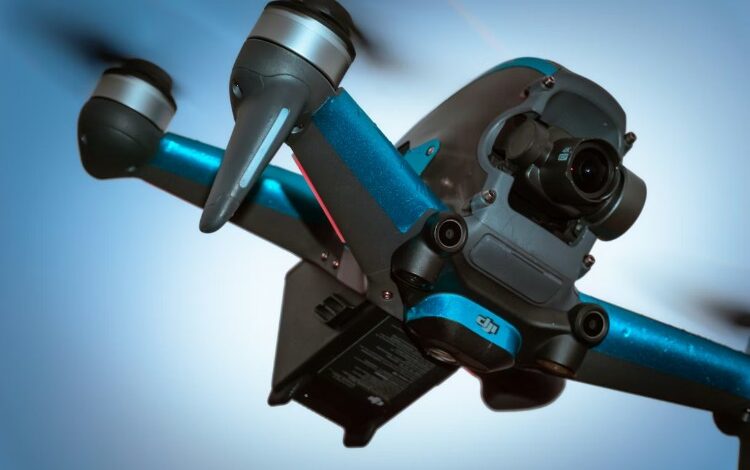
Not long ago, FPV was something you did in a field on a weekend because it was fun, fast, and a little bit addictive. Nobody was thinking about professional applications. The people flying were hobbyists, racers, tinkerers — and the idea that FPV drones would one day end up in the hands of cinematographers, infrastructure engineers, and emergency services would have seemed like a stretch. That changed faster than most people in the industry expected, and the reasons behind it are worth unpacking.
What Made FPV Different From the Start
The core idea behind FPV is not complicated. The pilot wears a headset or watches a monitor and sees live footage from the drone’s camera. That sounds like a small thing until you actually try it. Suddenly, you are not standing on the ground trying to judge where the aircraft is from the outside. You are inside it, looking through its eyes, reacting to what is in front of you in real time.
That shift in perspective changes what is possible in a very direct way. Here is how it compares to conventional drone operation:
| Conventional Drone | FPV Drone |
| Pilot watches from the ground | Pilot sees from the drone’s perspective |
| Position is estimated visually | Position is felt instinctively |
| Struggles in tight or enclosed spaces | Built for exactly those environments |
| Best for wide, planned aerial shots | Best for dynamic, reactive, close-range work |
For professional work where that kind of precision matters — tracking a fast-moving subject, flying inside a building, nailing a specific angle in a single pass — nothing else really compares.
The Industries That Adopted It First — and Why
The professional world did not discover FPV all at once. It happened gradually, industry by industry, as pilots started showing up with footage that made people stop and ask how it was done. There was no single moment when FPV became professional — it was more like a slow accumulation of evidence. Each industry that tried it found something different to value in it, and word spread from there. The four sectors that led the way are worth looking at individually, because the reasons each one adopted FPV are quite different from one another.
Film and Commercial Video
The film was first. Directors and cinematographers started realizing that FPV could get a camera into places that were simply off limits to anything else — threading through a narrow corridor, dropping alongside a cliff face, and weaving through a forest at speed. The footage looked unlike anything that had come before it. It had energy. It pulled the viewer in rather than just showing them something from above. Advertising agencies figured this out quickly. So did music video directors. Within a few years, it stopped being a novelty and became a style that clients actively requested.
Sports Broadcasting
Sports followed naturally. Motorsport, mountain biking, skiing, surfing — events that happen fast and in demanding terrain suddenly had a camera that could actually keep up. The difference in broadcast coverage was noticeable. Where a conventional drone shot shows the scale of the environment, an FPV shot puts the audience inside the action. You feel the speed. You feel the terrain. Production companies that tried it once tended to keep using it, and it gradually became part of the standard toolkit for certain types of events.
Inspection and Infrastructure
This one surprised a few people. Inspection work is not glamorous, but it is important, and FPV turned out to be genuinely useful for it. Getting a camera close to a bridge support, a wind turbine blade, or a section of industrial pipework used to mean scaffolding, rope access teams, or expensive manned aircraft. A skilled FPV pilot can reach the same positions in minutes. The cost difference is significant, and the data is just as good, often better, because the operator can react in real time to what they are seeing rather than following a fixed flight path.
Emergency Services
Search and rescue teams and fire services started paying attention to. The ability to fly quickly through difficult environments — collapsed buildings, thick woodland, areas filled with smoke — and send back live footage to commanders on the ground turned out to have real operational value. FPV is not a replacement for other tools in those contexts, but it fills gaps that other tools cannot.
The Technology Had to Catch Up
Here is the honest part: early FPV gear was not professional-grade. It was fast and fun, but the image quality was limited, the reliability was inconsistent, and the legal framework for using it commercially was murky at best. Professional adoption only became realistic once several things improved at roughly the same time.
Digital video transmission replaced analog, and the jump in image quality was significant — the kind of difference that matters when footage ends up on a broadcast screen or in a commercial. Stabilization technology has gotten good enough that smooth, usable footage could come out of an aircraft moving aggressively. Build quality and component reliability improved to the point where operators could put the equipment in demanding situations without constantly worrying about failures. And regulators started producing clearer rules around commercial FPV operations, which gave operators something concrete to work within rather than figuring it out on a job-by-job basis.
A Discipline in Its Own Right
FPV has earned its place in professional drone operation. It is not competing with conventional platforms — it sits alongside them as a different tool with different strengths, picked for specific jobs where its particular capabilities are the deciding factor. For those looking to get into it, r5d5.com is worth exploring — a wide range of models and components with filters to narrow things down by use case and spec.
The pilots who built careers around it put in serious time to get there. The skill ceiling is high, and the operators at the top of that range are genuinely among the most capable in the industry. The demand for what they do has grown steadily, and the range of applications keeps expanding. What began in fields and car parks on weekends has become something with real professional weight behind it — and by the look of things, it is not done growing yet.