What Happens After an AVO Is Filed Against You in NSW
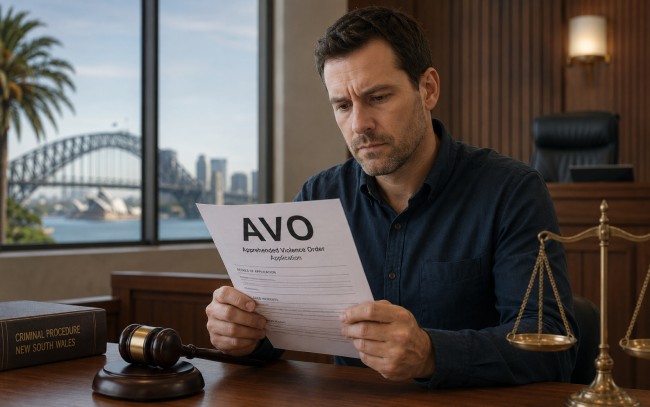
Finding out an AVO has been filed against you is a shock. One moment life is normal; the next, you’re holding a court document you barely understand, with a date looming and no clear idea of what it means for your home, your family, or your future.
Take a breath. An AVO is not a criminal charge. But it is serious, and the steps that follow move quickly. Here’s a plain-English breakdown of what actually happens – and what you can do about it.
The Difference Between an ADVO and an APVO
The first thing to understand is which type of AVO has been filed against you, because the two work differently.
An Apprehended Domestic Violence Order (ADVO) applies when you have a domestic relationship with the protected person – a current or former partner, a family member, or someone you live with. An Apprehended Personal Violence Order (APVO) applies to everyone else: neighbours, coworkers, acquaintances.
Both are made under the Crimes (Domestic and Personal Violence) Act 2007 (NSW). Both carry the same core prohibitions and the same criminal consequences if breached. The key difference is the relationship – and, importantly, the penalties for breach are slightly higher for ADVOs (up to three years imprisonment, compared to two years for APVOs).
The Three Types of AVO: Provisional, Interim, and Final
Most people don’t realise there are three distinct stages to an AVO. Understanding them helps you know exactly where you are in the process.
Provisional AVO – This is the emergency order. Police can issue it on the spot, without a court hearing, when they believe someone is in immediate danger. It lasts for up to 28 days under Section 32 of the Act and takes effect the moment it is served on you. You don’t get advance warning.
Interim AVO – At your first court mention (usually within those 28 days), a magistrate will almost always convert the provisional order into an interim AVO. This is a temporary court order that stays in place while the matter is being prepared for a final hearing. It has exactly the same legal force as a final order.
Final AVO – This is the permanent order, made either because you consented to it or because a magistrate found, on the balance of probabilities, that the protected person has reasonable grounds to fear you. Final AVOs typically run for two years, though the court can set a different duration.
What Conditions Will Be Placed on You
Every AVO – provisional, interim, or final – includes mandatory standard conditions. These prohibit you from assaulting, threatening, stalking, harassing, intimidating, or destroying the property of the protected person.
Beyond those, a magistrate can add tailored conditions specific to your situation:
- No contact orders – no calls, texts, emails, or messages through third parties
- Exclusion zones – staying away from the protected person’s home, workplace, or children’s school
- Distance restrictions – not coming within a specified number of metres of the person
- Firearms conditions – surrendering your licence and any firearms immediately (this is automatic upon service of an interim AVO under the Firearms Act 1996)
That last point catches many people off guard. If you hold a firearms licence for work or recreation, it is suspended the moment an interim AVO is served on you, and revoked if a final order is made. You cannot reapply for 10 years after the order expires.
What Happens at Court
Your first court date is called a mention. It is not a full hearing – it is more like a check-in where the magistrate establishes where things stand.
At that mention, you have four real options: consent to the AVO (without admitting the allegations), offer undertakings to the court, seek an adjournment to get legal advice, or indicate that you intend to contest the order. None of these options is a trap. Consenting to an AVO does not give you a criminal record – the order itself is civil, not criminal.
If you contest the AVO, the court will set a timetable for evidence exchange and schedule a final hearing. Both sides file witness statements, and at the hearing a magistrate hears the evidence, allows cross-examination, and decides whether the legal test under Section 16 of the Act is met. The burden sits with the applicant, on the balance of probabilities.
If the magistrate makes a final AVO against you and you believe the decision was wrong, you have 28 days to appeal to the District Court.
The Consequences of Breaching an AVO
This is the part that matters most: breaching an AVO is a criminal offence, full stop.
It doesn’t matter if the protected person invited the contact. It doesn’t matter if the breach was a single text message or a brief conversation at a shared school pick-up. Under Section 14 of the Crimes (Domestic and Personal Violence) Act 2007, contravening any condition of an AVO – provisional, interim, or final – exposes you to criminal prosecution, a fine of up to $5,500, and imprisonment.
If the breach involves an act of violence and the order is an ADVO, the court is required by law to impose a term of imprisonment. There is no discretion.
The safest approach is to treat every condition as absolute, even when compliance feels unfair or inconvenient. If a condition is causing genuine hardship – for example, an exclusion zone that prevents you from attending your own workplace – you can apply to the court to vary it.
Does an AVO Go on Your Criminal Record?
No – not automatically. The AVO itself is a civil order and will not appear on a standard criminal history check. What will appear on your record is any conviction for breaching the order. Enhanced background checks – such as Working with Children Checks or checks for security and law enforcement roles – may also disclose the existence of an AVO, even without a breach conviction.
Get Legal Advice Before Your First Court Date
The mention date comes around fast, often within days of being served. Walking into that courtroom without understanding your options is one of the most common mistakes defendants make.
Whether you’re considering consenting to the order, negotiating conditions, or contesting the application entirely, the outcome of that first appearance shapes everything that follows. Experienced AVO lawyers NSW can advise you on the strength of the application against you, what conditions are reasonable to accept, and whether contesting the order is in your best interests. Getting that advice before – not after – your court date makes a real difference.