Why Battery Choice Can Make or Break a Day on the Water
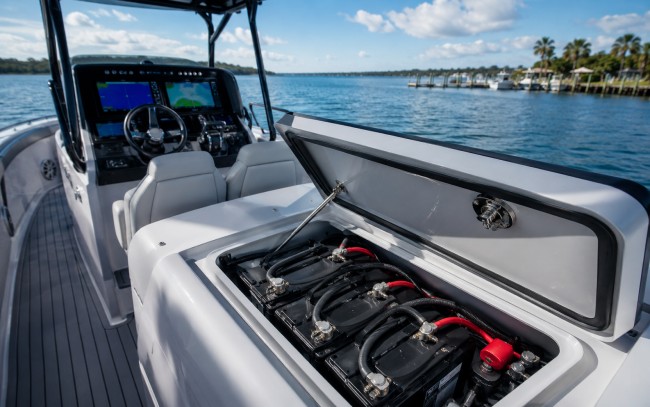
There’s a particular kind of frustration that only boating people really understand: the weather is perfect, the fuel tank is full, the route is planned, and then the engine won’t turn over. More often than not, the problem isn’t dramatic or mysterious. It comes down to the battery.
On land, many drivers can get away with treating a battery as a fairly generic component. On the water, that mindset is expensive. Boats place unique demands on power systems, and the consequences of getting battery choice wrong go beyond inconvenience. It can affect safety, electronics performance, engine reliability, and how much confidence you have once you leave the marina.
A good day on the water depends on dozens of moving parts, but battery selection sits closer to the centre of that equation than many owners realise.
Marine conditions are harder on batteries than most people think
A boat battery doesn’t live an easy life. It deals with constant vibration, moisture, temperature swings, and long periods of inactivity followed by intense demand. Add in salt exposure for coastal use, and you have an environment that tests both battery design and installation quality.
That matters because not all batteries are built to cope with those conditions. A battery that performs acceptably in a car or van may struggle badly in a marine setting. Even if it “works” at first, the lifespan can be shortened dramatically when it is exposed to repeated shock, damp air, and irregular charging cycles.
Then there’s the way boats use power. A vessel might need a strong burst of current to start the engine, but it may also need sustained power for fish finders, GPS, radios, lighting, pumps, and onboard appliances. That combination of starting demand and ongoing electrical draw means battery type has to match the actual use case, not just the available space in the battery compartment.
One battery does not suit every boat
Starting batteries vs deep-cycle batteries
This is where many owners run into trouble. Starting batteries are designed to deliver a large amount of current in a short burst. They’re ideal for cranking an engine, but they’re not meant to be repeatedly drained over long periods.
Deep-cycle batteries are different. They’re built to provide steady power over time and tolerate repeated discharge and recharge cycles. That makes them better suited for trolling motors, electronics banks, and house loads.
Some boats benefit from dual-purpose batteries, but “dual-purpose” should not be treated as a universal answer. If your vessel has significant onboard electrical demand, a dedicated starting battery and a separate deep-cycle house battery bank is often a much smarter setup.
Why marine-specific design matters
A battery used on a boat should be built with marine use in mind, not simply adapted from an automotive model. Features like reinforced internal construction, vibration resistance, sealed designs, and corrosion-resistant terminals aren’t nice extras. They directly affect reliability.
That’s why it pays to look at batteries designed for use in water-based vehicles rather than assuming any 12V battery with the right dimensions will do the job. The specification needs to align with how the vessel is used, how often it sits idle, and what equipment is drawing power once you’re underway.
Capacity is not just about getting the engine started
A battery that starts your boat at the dock can still fail you later in the day. That’s the distinction many owners only learn after a few avoidable breakdowns.
Cold cranking amps matter, particularly for engine starting, but they’re only part of the picture. Reserve capacity and amp-hour rating are just as important if you rely on electronics for navigation, communication, or fishing. A battery can look fine on paper if you focus only on start-up power, yet fall short once you spend several hours running accessories.
Think about the actual profile of your day on the water. Are you making short runs between stops? Drifting with electronics on for long stretches? Using a trolling motor heavily? Running a fridge or cabin systems? Battery selection should reflect that real-world pattern, not an idealised version of it.
A few practical checks help:
- Match battery type to application: starting, deep-cycle, or separate banks
- Check reserve capacity, not just cranking power
- Confirm charging compatibility with your alternator or onboard charger
- Factor in vibration, moisture, and storage conditions
That last point is often underestimated. A technically suitable battery can still underperform if it isn’t being charged correctly.
Charging systems and battery chemistry need to work together
Not every charger suits every battery
Modern boats use a mix of battery types, including flooded lead-acid, AGM, gel, and lithium. Each chemistry has different charging requirements. If the onboard charger, regulator, or alternator profile isn’t appropriate, even a high-quality battery can age prematurely.
AGM batteries, for example, are popular in marine settings because they’re sealed, robust, and maintenance-friendly. But they still need correct charging voltages. Lithium offers weight and performance advantages, yet it requires an electrical system designed to support it safely. Simply swapping chemistries without checking compatibility is asking for trouble.
Storage habits make a big difference
Seasonal use is another hidden battery killer. Many boats spend weeks or months sitting idle. If batteries are left partially discharged during that time, sulphation and capacity loss can set in quickly. Owners sometimes blame a “bad battery” when the real problem is poor off-season maintenance.
A battery maintainer, periodic voltage checks, and clean, tight connections go a long way. So does avoiding the habit of running accessories at anchor without understanding how much capacity remains.
The cost of the wrong choice is bigger than the battery itself
When a battery underperforms on land, you call for help. On the water, the situation can escalate. Loss of engine start, disabled bilge pumps, unreliable navigation equipment, or a dead VHF radio are more than annoyances. They can become safety issues, especially in poor weather or busy channels.
There’s also the less dramatic but still costly side: ruined fishing trips, shortened battery life, damaged electronics from unstable voltage, and repeated replacement costs from buying the wrong unit in the first place.
In practice, the best battery choice is rarely about finding the cheapest option or the highest number on the label. It’s about fit. Fit for the engine, fit for the load, fit for the charging system, and fit for the environment.
A better day on the water starts before you leave shore
Battery choice is easy to ignore because it’s hidden away until something goes wrong. But on a boat, dependable power underpins almost everything. Start-up confidence, electronics performance, safety systems, and time spent actually enjoying the water all depend on it.
If you want fewer surprises offshore, start by looking at your battery setup honestly. Not just whether it works today, but whether it truly suits the way you use your boat. That one decision can be the difference between a smooth day afloat and an early return to the dock.