Seedance 2.1 For Game Developers
The independent video game industry is experiencing a massive renaissance, with small studios and solo developers routinely releasing titles that rival mainstream corporate games in both creativity and emotional depth. However, the biggest hurdle for an indie game developer is rarely the coding or the level design; it is the marketing. Securing funding on platforms like Kickstarter or driving wishlist additions on Steam requires a captivating, cinematic game trailer. Unfortunately, producing high-end CGI trailers traditionally costs tens of thousands of dollars, effectively shutting independent creators out of premium marketing spaces.
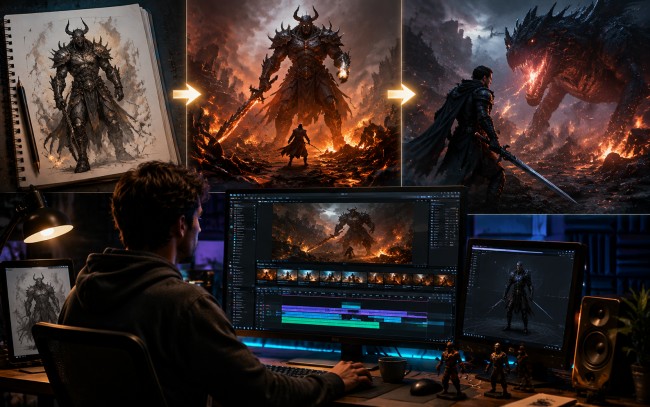
This financial barrier is finally being dismantled by the strategic application of advanced generative video models. Developers are discovering that they no longer need a massive team of 3D animators to create breathtaking promotional material. By integrating a dedicated, multimodal environment like Seedance 2.1 into their promotional pipeline, small studios can transform their foundational 2D concept art into fully realized, cinematic motion sequences, giving their projects the premium presentation they deserve.
The Concept Art Resurrection
During the early phases of game development, studios commission beautiful 2D concept art to establish the mood, character designs, and environments of their world. Traditionally, these static images sat in a pitch deck, unseen by the public until a post-launch artbook was released.
Modern artificial intelligence fundamentally changes the utility of these assets. By utilizing advanced Image-to-Video workflows, a developer can upload a static painting of their game’s final boss or a sprawling cyberpunk city level. The AI engine uses this image as a strict visual anchor, preventing the structure from morphing or losing its unique artistic style. Through precise text prompting, the developer can then inject life into the scene. A static dragon can be animated to rear back and breathe fire; a painted futuristic city can suddenly feature flying vehicles and blinking neon signs. This process immediately upgrades a static concept into a dynamic, trailer-ready asset.
Directing the Action Sequences
A game trailer must convey excitement and momentum. Early generative tools were incapable of this because they lacked spatial awareness, often producing slow, floating camera movements that felt entirely disconnected from the action.
To create an adrenaline-pumping sequence, developers must use an AI video generator that understands traditional cinematography. When designing an action shot, you can use specialized commands to force the AI to execute rapid camera movements. Prompts such as “fast tracking shot, heavy motion blur, sudden dolly zoom, shaky handheld camera effect” translate perfectly into the digital render. This allows developers to simulate intense combat sequences, high-speed chases, or dramatic character reveals, stitching together multiple generated clips to form a cohesive, heart-pounding narrative that grabs a gamer’s attention in the first three seconds.
Native Soundscapes and Voice Acting
No cinematic game trailer is complete without a massive, immersive audio mix. In the past, matching heavy sound effects to AI-generated footage was a tedious post-production nightmare.
The current standard of generation platforms integrates audio synthesis natively into the visual rendering process. As the developer prompts for an explosion or a magical spell cast, the system generates the corresponding acoustic impact simultaneously. Furthermore, if a developer wants to feature voice acting in their trailer, they can utilize native lip-sync technology. By uploading a recorded voice line, the system analyzes the phonemes and seamlessly animates the AI-generated character’s mouth to match the dialogue perfectly. This holistic approach ensures that the final output looks and sounds like a multimillion-dollar studio production.
Conclusion For independent game developers, visibility is survival. By leveraging the advanced multimodal capabilities, strict visual anchoring, and native audio generation of modern AI tools, small studios can punch far above their weight class. Transforming raw concept art into a masterpiece of cinematic marketing is no longer a luxury—it is an accessible reality that allows pure creativity to win the battle for gamer attention.