Scalp Care Solutions for Common Skin Conditions
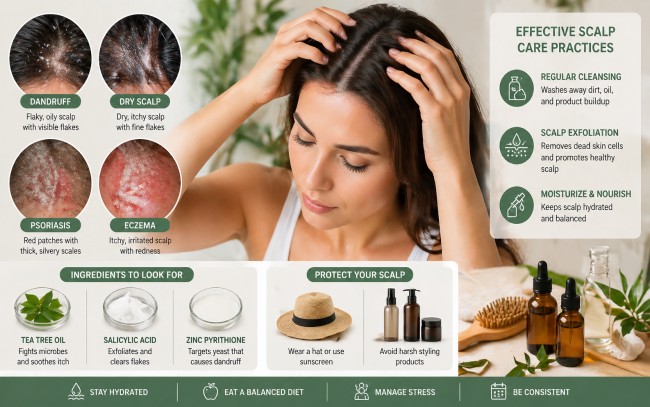
Do you get flaky, itchy, or irritated skin on your scalp and want clear fixes? Dandruff affects about half of adults at some point, and dry skin, psoriasis, and eczema also cause flaking and itch. This post shows simple causes, easy care steps, and product tips to help your scalp feel better. Read on.
Identifying Common Scalp Conditions
Many people get scalp problems that cause itching or flaking. These issues often look similar at first, so you need to watch for small clues, then choose care routines that help your scalp feel better.
Dandruff vs. Dry Scalp
Scalp issues often get mixed up, so here is a clear comparison.
| Item | Dandruff | Dry Scalp |
|---|---|---|
| Cause | Overgrowth of skin yeast, excess oil, or oily skin | Lack of oil, low humidity, or harsh soaps |
| Flake Appearance | Large, oily, yellowish flakes | Small, white, powdery flakes |
| Itch Level | Can itch, often moderate | Often very itchy, tight feeling |
| Scalp Oil | Usually oily or normal | Usually dry or slightly dry |
| Common Triggers | Stress, hormones, oily hair products | Cold weather, hot showers, harsh shampoos |
| Best Shampoos | Use zinc pyrithione, ketoconazole, or selenium sulfide | Use gentle, moisturizing cleansers, avoid sulfates |
| Home Care Tips | Wash regularly, use anti-dandruff once or twice weekly | Cut back on washing, add a light oil or conditioner |
| Treatment Timeframe | May clear in weeks with right shampoo | Often improves fast with added moisture |
| When to See a Pro | If flakes persist, worsen, or cause soreness | If cracking, bleeding, or extreme itch occurs |
Next, learn about psoriasis and eczema on the scalp.
Psoriasis and Eczema
Psoriasis and eczema are two common skin conditions that can affect the scalp. Psoriasis often causes red patches covered with thick, silvery scales. This condition can be itchy and painful.
Eczema, on the other hand, leads to dry patches that may crack or ooze. It also results in itching and irritation, making it uncomfortable for many people.
Both conditions require proper care to manage symptoms. Treatments typically include moisturizing products to hydrate the skin and reduce flaking. Some natural remedies might help too, like using essential oils for soothing effects.
Always choose gentle products when caring for your scalp’s health; harsh chemicals can make problems worse instead of better. Healthy hair starts with a healthy scalp.
Effective Scalp Care Practices
Cleansing your scalp is key. Wash it regularly to keep dirt and oil away. Exfoliating also helps a lot. This practice removes dead skin, making way for healthy hair growth.
Regular cleansing to prevent buildup
Regular cleansing helps keep your scalp fresh. It removes dirt and oil that can cause problems.
- Clean your scalp at least twice a week. This helps to remove excess oils and dead skin cells.
- Use a gentle shampoo. Look for one that is free from harsh chemicals.
- Focus on your scalp when washing. Massage the shampoo into your scalp, not just your hair.
- Rinse well to avoid buildup of shampoo residue. Leftover product can lead to irritation or itchiness.
- For dandruff or flaking issues, consider shampoos with specific ingredients like tea tree oil or salicylic acid.
- After washing, condition the tips of your hair only. Too much conditioner on your scalp can make it oily.
- If you style your hair often, wash it more frequently. This keeps styling products from building up.
Good cleansing is key for healthy scalp care. Your scalp deserves attention and care!
Scalp exfoliation: Benefits and frequency
Scalp exfoliation helps keep your scalp healthy. It removes dead skin cells, excess oil, and product buildup. All these can cause itching and flaking. A clean scalp is key to good hair health.
Exfoliating also improves blood flow to the area, which nourishes the hair follicles. Healthier follicles mean stronger hair growth.
Exploring various care solutions can help differentiate between dandruff and dry scalp for more effective treatment.
You should exfoliate your scalp once a week or every two weeks. This frequency works for most people without causing irritation. Use gentle products made for the scalp; avoid anything too harsh that could make problems worse.
Essential oils like tea tree oil are great natural choices as they help with dandruff treatment and reduce itching too. Keeping up with this practice will support your scalp health and enhance your hair care routine.
Choosing the Right Products for Scalp Health
Choosing the right products for your scalp is key to good health. Look for ingredients like salicylic acid, tea tree oil, and zinc pyrithione. These can help with itching and flaking, while targeted treatments such as Betacap scalp application may be recommended for more persistent or severe scalp conditions.
Ingredients to look for: Salicylic acid, tea tree oil, and zinc pyrithione
Here are three scalp-friendly ingredients to watch for, with short notes on use and safety.
| Ingredient | What it does | How to use | Cautions | Best for |
|---|---|---|---|---|
| Salicylic acid | Breaks up dead skin. Clears flakes and softens scales. | Pick shampoos with 1% to 3% strength. Use two to three times a week. | May dry skin. Rinse well. Stop if you get a rash. | Thick flaking, oily scalp, psoriasis spots. |
| Tea tree oil | Fights microbes. Reduces itch and mild inflammation. | Choose products with 2% to 5% oil, or dilute 1 drop per teaspoon of carrier oil. Apply a few times weekly. | Can irritate sensitive skin. Patch test on inner arm first. | Mild dandruff, itchy scalp from yeast or bacteria. |
| Zinc pyrithione | Stops yeast that drives dandruff. Calms redness. | Use anti-dandruff shampoos with 1% zinc pyrithione. Lather, wait 2 to 3 minutes, then rinse. | Avoid daily use if scalp feels dry. Not for acute open wounds. | Recurring flaking, seborrheic dermatitis, routine prevention. |
Avoiding harsh chemicals that worsen conditions
Harsh chemicals can hurt your scalp health. Many products contain sulfates, parabens, and alcohol that can cause irritation. These ingredients may make itching and flaking worse. They strip away natural oils from the scalp, leading to dryness.
Look for gentle formulas instead. Natural remedies often work better for sensitive skin. Ingredients like tea tree oil or aloe vera help soothe irritation without causing harm. Reading labels carefully is key to choosing safe hair care products for a healthy scalp.
Protecting Your Scalp from External Factors
Your scalp needs care from the sun and styling products. Use hats or sunscreen to shield it from harmful rays. Keep your scalp safe and happy!
Managing sun exposure with sunscreen or hats
Protecting your scalp from the sun is important. Too much sun can cause irritation and skin problems.
- Apply sunscreen to your scalp. Use a spray or stick sunscreen that works for hair. This keeps your scalp safe from UV rays.
- Wear a hat outdoors. A wide-brimmed hat shades your face and neck, protecting your scalp too.
- Choose hats made of breathable material. Cotton or straw hats help keep you cool while blocking sunlight.
- Reapply sunscreen every two hours. If you sweat or swim, add more often to protect against sunburn.
- Look for sunscreens with SPF 30 or higher. Higher numbers give better protection and help keep skin healthy.
- Combine these tips for best results. Using both sunscreen and a hat offers great care for your scalp health while you’re outside.
Preventing damage from styling products
Styling products can harm your scalp. They may cause irritation or dryness, so you should use them with care.
- Choose gentle products. Look for those that are free from harsh chemicals. This helps keep your scalp healthy and avoids irritation.
- Use styling products sparingly. Applying too much can clog hair follicles and lead to oiliness or dandruff.
- Wash your hair regularly. Cleansing removes buildup from styling gels, sprays, or pomades. This keeps your scalp clean and fresh.
- Rinse thoroughly after washing. Make sure no product is left in your hair; this prevents irritation and flaking.
- Try natural alternatives when possible. Natural oils, like coconut or jojoba oil, can style hair without damaging the scalp.
- Avoid using hot tools every day. Heat can dry out the scalp and damage hair follicles over time.
- Monitor how your scalp reacts to new products. If you notice itching or redness, stop using the product immediately.
- Hydrate your scalp with moisturizing treatments regularly. Keeping it moisturized can help prevent dryness caused by styling products.
Now let’s look at ways to protect your scalp from sun exposure…
Conclusion
Treating scalp issues can be simple. Focus on good habits, like regular washing and moisturizing. Use gentle products with helpful ingredients, such as tea tree oil or salicylic acid. Protect your scalp from the sun and harsh styling tools too. With these tips, you can keep your scalp healthy and comfortable!