Steps to Take During Sudden Dental Issues
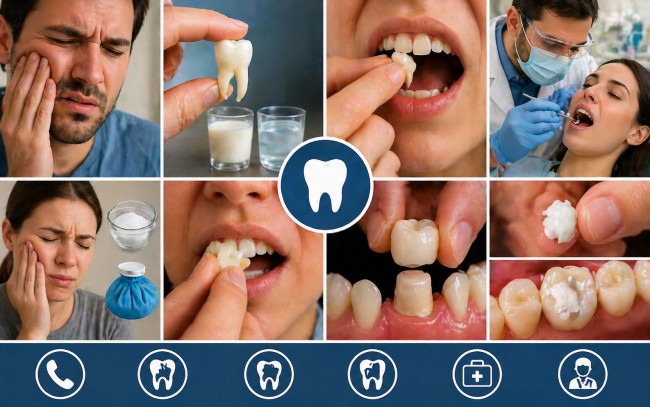
Is your tooth sore after a fall, or did a filling come loose? A quick response can ease pain and save a tooth. This guide gives simple first aid steps, pain relief tips, and clear signs to call a dentist.
Keep reading.
Handle a Knocked-Out Tooth
If a tooth gets knocked out, quick action can help save it—you only have minutes. Care for the tooth gently and seek help fast, as time matters in these dental emergencies.
Pick it up by the crown, not the root
Grab the tooth by the crown, not the root. Do not touch the root, you can harm cells needed for tooth retrieval and reimplantation. Rinse gently with milk or saline if the tooth is dirty. Hold the crown only, keep the root intact. Place the tooth back in the socket if you can, or store it in milk, saline, or inside your cheek, as quick first aid. Call a dentist right away for emergency dental care.
Rinse gently and attempt reinsertion or store in milk or saline
Act quickly if you lose a tooth. First, rinse the tooth gently with clean water. Hold it by the crown, not the root. This way, you keep it safe. You have two options now: try to put the tooth back in its spot or store it in milk or saline solution. Milk is best because it has nutrients that can help keep the tooth alive.
If you put the tooth back in, bite down softly on a clean cloth to hold it there. Even if you can’t save the tooth yourself, get dental care fast. A dentist will know how to help and may even be able to reattach your lost tooth! Now, let’s talk about managing severe toothaches and swelling next….
Seek immediate dental care
Seek immediate dental care if you have a dental emergency. Time is key in these situations. The sooner you see a dentist, the better chances are for saving your tooth or reducing pain.
A knocked-out tooth should be placed back as soon as possible or stored in milk to keep it alive until you can reach a dental office. Pain that doesn’t go away calls for quick action too; calling your dentist helps find the right treatment options.
Dental distress needs professional help fast. Whether it’s severe pain, swelling, or broken teeth, don’t wait around. Early treatment can lead to better outcomes and less worry later on. Your oral health matters—taking care of sudden issues makes all the difference!
Manage Severe Toothache or Swelling
A bad toothache can ruin your day. Rinse your mouth with warm salt water to ease the pain and clear away any food stuck in there… If swelling starts, use a cold compress on the outside of your cheek.
Rinse with salt water and check for trapped debris
Rinse your mouth with warm salt water. This can help clean the area and ease swelling. Swish it gently to avoid more pain. After rinsing, look for any bits of food or debris stuck between your teeth.
If you find anything, try to remove it carefully with a toothbrush or dental floss. Keeping your mouth clean is key during a toothache. If the pain doesn’t get better soon, contact your dentist for advice and care right away!
Use a cold compress to reduce swelling
After rinsing with salt water and checking for trapped debris, a cold compress can help. It reduces swelling and numbs the pain. Take an ice pack or a bag of frozen peas. Wrap it in a towel to avoid skin irritation. Press the cold compress against your cheek near the hurting area. Do this for about 15 to 20 minutes at a time.
Try not to place ice directly on your skin; it could cause frostbite. This simple step offers quick relief during dental emergencies like toothaches or injuries. If swelling continues or gets worse, call your dentist right away for further care!
Contact a dentist if the pain persists
Pain that lasts longer than a day can mean something serious. If your toothache does not go away, call a dentist right away. They can help find the cause of your pain and give you relief. Do not wait too long; dental emergencies need quick attention.
Your oral health is important. A dentist can offer treatment options to stop the pain and fix any issues. Keep in mind that ignoring pain might lead to bigger problems later on. Taking care of your teeth now will save you trouble in the future. Next, let’s discuss how to stabilize chipped or broken teeth.
In such situations, it’s crucial to contact an emergency dentist in Astoria immediately to ensure the best chance of saving the tooth.
Stabilize Chipped or Broken Teeth
- Stabilize Chipped or Broken Teeth: If your tooth is chipped or broken, save any pieces you can find. Cover sharp edges with dental wax or sugarless gum for safety. An urgent visit to the dentist is a must! Want to know more about taking care of your teeth?
Save any fragments if possible
Save any pieces of a chipped or broken tooth. These fragments can help your dentist understand what happened. Keep the pieces clean and dry; this helps in treatment later on. If you can, avoid touching the sharp edges to prevent cuts inside your mouth.
Storing the fragments safely is key, too. Use a cloth or place them in a small container. This way, you won’t lose them before you get to the dental office. Quick action can make a big difference in emergency care for your oral health!
Cover sharp edges with dental wax or sugarless gum
Chipped or broken teeth can have sharp edges. These edges can hurt your mouth and gums. A quick fix is to use dental wax or sugarless gum. Take a small piece of wax and press it on the sharp edge. This will help protect your tongue and cheeks from cuts.
Sugarless gum works, too! Chew a little and mold it over the rough spot. It might not be a perfect solution, but it helps until you reach the dentist. Get an appointment as soon as possible for proper care.
Schedule an urgent dental visit
Cover sharp edges with dental wax or sugarless gum. This helps protect your mouth from injury. After taking care of those edges, it’s time to see a dentist right away. Urgent visits are key for serious issues like broken teeth or bad pain.
Make that call as soon as you can. Describe your problem clearly when you talk to the office staff. They may ask how long you’ve been in pain and if there is swelling, too. The sooner you get help, the better your chances for a good outcome. Don’t wait; seek professional assistance today!
Address Lost Fillings or Crowns
- Address Lost Fillings or Crowns: You can use dental cement to cover the area where the filling or crown was lost. Avoid chewing on that side until you see a dentist for help.
Use dental cement or temporary adhesive to protect the area
Use dental cement or a temporary adhesive to cover the spot where a filling or crown is missing. This helps keep the area safe until you can see a dentist. These products are easy to find at most stores. Follow the instructions on the package for best results.
Be careful not to chew on that side of your mouth while you wait for professional assistance. Avoid any hard or sticky foods, as they might cause more damage. Taking these steps will help protect your oral health during this dental emergency.
Avoid chewing on the affected side
Chewing on the side of a lost filling or crown can cause more pain. It puts pressure on the injured area. This can make things worse, leading to more damage or discomfort. Stay away from that side until you see your dentist.
Eating soft foods helps too. Stick to items like yogurt, mashed potatoes, and smoothies for now. These options are easier on your mouth and will help with pain relief. Take care of your dental health by avoiding hard foods until you get proper treatment.
Conclusion
Taking care of sudden dental issues is key. Stay calm and follow the steps provided. Keep your mouth clean and seek help from a dentist quickly. These tips can make a big difference in your comfort and health. Quick action leads to better outcomes!