Why Valleys and Roof Transitions Are Common Trouble Areas for Leaks
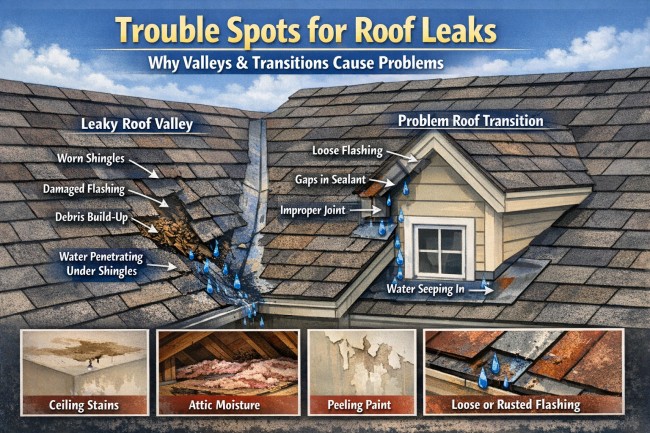
A roof rarely starts failing in the middle of a wide, open section. Trouble usually begins at the points where water is forced to move faster, change direction, or pass through tighter construction details. That is why so many homeowners start looking into roofing services provo after they notice stains, damp attic areas, or recurring leaks near intersections and edges. Valleys and roof transitions do more than connect parts of a roof. They carry concentrated runoff and depend on precise installation to stay watertight year after year.
When those areas are built well, they quietly do their job through rain, snow, heat, and wind. When they are not, they tend to show problems earlier than the rest of the roof. A small gap in flashing, aging sealant, worn shingles, or underlayment damage can let in water long before the larger field of the roof shows obvious wear. That is what makes these sections worth a closer look.
Why Valleys Handle More Stress Than Other Roof Areas
A valley is where two roof slopes meet and create a channel for runoff. Instead of shedding water evenly in separate directions, both sections direct it into a single narrow path. During a steady storm, that path can carry far more water than the surrounding shingles ever see. If debris collects there or materials begin to wear down, the valley becomes one of the easiest places for water to slip beneath the surface.
This is also where installation quality matters most. Valleys require careful layering of underlayment, flashing methods that fit the roof design, and shingle placement that avoids weak openings. A roof can look fine from the ground, while the valley is already wearing faster than the rest of the system. Once water gets underneath, it may not show up indoors right away. It can travel along the decking or framing before leaving a stain somewhere else.
That delayed evidence is part of what makes valley leaks so frustrating. By the time a homeowner notices the problem, the water may have been moving for longer than expected.
Roof Transitions Create Openings Water Likes to Test
Roof transitions are the places where one surface meets another. That could mean a roof joining a wall, a slope changing pitch, or a section tying into a dormer or other raised feature. These are not simple flat runs of shingles. They are points of interruption, and every interruption gives moisture another chance to work its way in.
Transitions depend heavily on flashing. If flashing is bent improperly, fastened poorly, or left exposed where it should be protected, water can creep behind it. Even a small mistake can lead to a recurring leak because these areas are exposed to runoff from multiple directions. Wind can make the problem worse by pushing water where gravity alone would not.
This is one reason homeowners often need roofing services provo after a leak that seems to return even after a repair. If the visible stain was treated but the transition detail itself was not corrected, the source may still be active.
Small Installation Errors Tend to Grow Over Time
Many roof leaks do not begin with major storm damage. They begin with details that were slightly off from the start. A nail placed too high, flashing that does not extend far enough, a seam that was not sealed correctly, or shingles cut too tightly in a valley can all shorten the assembly’s lifespan.
At first, those flaws may not cause visible trouble. Then the roof goes through repeated expansion and contraction. Materials heat up, cool down, dry out, and shift. Water follows the path of least resistance. What started as a minor weakness slowly becomes a reliable entry point.
That pattern is common in valleys and transitions because those areas have little margin for error. They are constantly dealing with concentrated water flow and movement at seams. Once the protective layers begin to separate, the damage tends to spread outward into wood decking, insulation, and nearby finishes.
Why Leaks in These Areas Are Often Misdiagnosed
One of the more difficult parts of roof leak detection is that the drip point inside the house may not line up with the actual opening above it. Water can move several feet before it becomes visible. A ceiling stain near one room may be tied to a valley or transition somewhere higher up the roof.
That is why quick surface patching often fails. If the inspection focuses only on the most obvious spot, it can miss the construction detail that caused the leak in the first place. Valleys, sidewalls, headwalls, and pitch changes should all be checked carefully when tracing moisture entry.
A proper repair is not just about covering a gap. It is about figuring out why that gap formed and whether surrounding materials have already been compromised. In many cases, damaged flashing, brittle shingles, or worn underlayment around the transition need attention together.
What Homeowners Should Watch For
These trouble areas do not always announce themselves with a steady indoor drip. Sometimes the first clues are quieter. Homeowners may notice discoloration on a ceiling, peeling paint near the upper walls, musty smells in the attic, or shingles that appear to wear out faster in narrow roof channels. Debris collecting in valleys can also be a warning sign because trapped moisture tends to keep materials wet longer than they should be.
Outside, flashing that looks loose, rusted, or uneven deserves attention. So do repeated leaks after storms, especially when they happen near intersections rather than the center of the roof. Those patterns usually point to detailed work rather than broad surface failure.
Why Early Repairs Matter More Here
A leak at a valley or transition can stay small for only so long. Because these sections handle so much runoff, once they fail, they often continue to feed water into the same weak spot. Repeated exposure can soften decking, stain insulation, and lead to interior repairs that cost far more than addressing the roofing detail early.
The good news is that not every issue means full replacement. In some cases, a targeted repair can solve the problem if the surrounding roof is still in good shape. But that only works when the damaged area is identified correctly and rebuilt with attention to the layers beneath the shingles, not just the outer surface.
Conclusion
Valleys and roof transitions are common leak points because they do the hardest work on the roof. They manage concentrated water flow, depend on carefully installed flashing and underlayment, and leave little room for shortcuts or aging materials. When problems develop there, they rarely stay isolated for long.
That is why these sections deserve more than a glance when signs of moisture appear. A careful inspection and a repair that addresses all details can prevent a small issue from becoming structural damage. For homeowners trying to protect the roof’s life, those high-stress intersections are often the first places to check.