What Is an Electrical Insulator & Why Are Insulators Important?
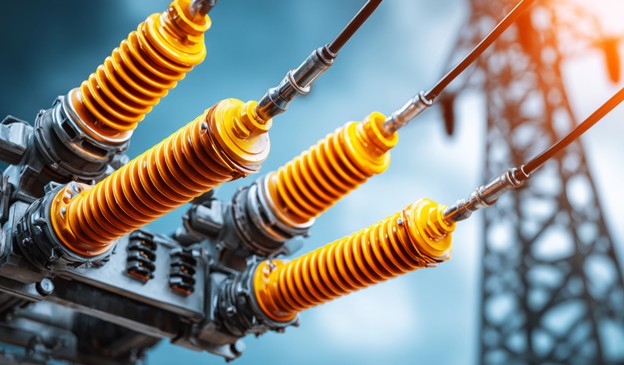
What Is an Electrical Insulator?
An electrical insulator is a material that resists the flow of electric current. In practical terms, it keeps electricity where it’s supposed to be—and just as importantly, prevents it from going where it shouldn’t. That might sound straightforward, but in real systems, electrical insulation does more than simply block current. It controls it. It stabilizes it. And in many cases, it protects entire assemblies from failure.
Materials such as ceramics, polymers, glass, and composites are commonly used for electrical insulation. Each comes with trade-offs. Some perform well at lower temperatures but degrade under heat. Others handle voltage well but lack mechanical strength.
This is where materials like MICA come into focus. With a natural layered structure and high thermal stability, MICA offers a balance of properties that many conventional materials struggle to match—especially in high-stress environments.
Why Are Insulators Important in Real Applications?
The question of why insulators are important becomes much clearer when you look at how systems behave under real operating conditions.
Safety Comes First
Electrical systems without proper insulation are inherently unstable. Current leakage, short circuits, and arc faults are all risks when insulation fails. In industries like aerospace or electric vehicles, that’s not a minor issue—it’s a critical one.
Reliability Over Time
Insulation isn’t just about initial performance. It has to hold up over thousands of operating hours. Heat, vibration, and environmental exposure all contribute to material fatigue. When insulation degrades, system performance follows.
Efficiency and Energy Control
Even small amounts of electrical leakage can impact efficiency. Especially when it comes to battery systems or power electronics. Effective electrical insulation keeps energy losses to a minimum and ensures systems perform as designed.
Thermal Management
In many applications, heat and electricity go hand in hand. Insulation materials must handle both. This dual requirement is where standard materials often fall short—and where engineered solutions become necessary.
What Makes a Good Electrical Insulator?
From an engineering standpoint, not all insulating materials are created equal. Performance is typically evaluated across several key parameters:
- Dielectric strength — how much voltage the material can withstand before breaking down
- Thermal endurance — the ability to maintain performance at elevated temperatures
- Mechanical integrity — resistance to compression, vibration, and physical wear
- Chemical resistance — stability when exposed to oils, solvents, or moisture
- Consistency — predictable performance across batches and over time
In demanding applications, these factors don’t exist in isolation. A material that performs well electrically but fails mechanically is still a weak link. The challenge is finding a solution that delivers across all fronts.
Why MICA Continues to Stand Out
MICA has been used as an electrical insulator for decades, but its relevance hasn’t diminished—in fact, it’s grown. Its structure allows it to be split into thin layers without losing strength. This gives it a unique combination of flexibility, durability, and insulating capability. More importantly, mica maintains its properties under conditions that would degrade many other materials.
- It withstands high temperatures without significant loss of performance
- It offers strong dielectric properties across a wide range of voltages
- It resists electrical tracking and breakdown
- It remains dimensionally stable under stress
In practice, MICA insulation is often used in motors, battery systems, and high-voltage components where both electrical and thermal loads are present. A MICA sheet, on the other hand, provides a more structured format—ideal for applications requiring precise dimensions and repeatable performance. These sheets can be integrated directly into assemblies where consistency is non-negotiable.
Where Electrical Insulation Really Matters
Different industries place different demands on materials, but the importance of electrical insulation is consistent across all of them.
Aerospace
Weight, temperature variation, and vibration all play a role. So, insulation materials need to perform reliably without adding unnecessary mass.
Automotive and Electric Vehicles
EV systems operate at high voltages and generate significant heat. Insulation plays a central role in battery safety, particularly in preventing thermal propagation between cells.
Electronics and Power Systems
As devices become more compact, the margin for error shrinks. Insulation must be precise, consistent, and capable of handling localized heat.
Military and Defense
Conditions are unpredictable, and failure is not an option. Materials must perform under mechanical shock, temperature extremes, and environmental exposure.
Emerging Energy Systems
Fuel cells and e-mobility platforms are pushing materials into new territory. Higher efficiency requirements mean insulation must perform without compromise.
The Value of Engineered MICA Materials
Raw materials alone are rarely enough for today’s applications. Performance often depends on how those materials are processed and engineered.Axim Mica focuses on developing advanced MICA-based materials that are designed for real-world conditions. By combining MICA with ceramics or Teflon, these materials can be tailored for specific performance requirements.
That includes improved heat resistance for high-temperature systems, enhanced mechanical strength for demanding environments, stable electrical insulation across varying loads and consistent quality across production runs. This kind of engineering matters. In high-performance industries, variability is a risk. Materials need to behave the same way every time, under the same conditions.
Choosing the Right Insulation Material
Material selection is often where projects succeed or fail. It’s not just about meeting specifications—it’s about understanding how a material will behave over time.
Engineers typically evaluate:
- Operating temperature ranges
- Voltage levels and fluctuations
- Environmental exposure (moisture, chemicals, etc.)
- Mechanical stresses
- Safety and compliance requirements
MICA-based materials tend to perform well across all of these factors, which is why they’re widely used in critical applications.
Looking Ahead
As systems become more compact and more powerful, the demands on electrical insulation will only increase. Higher voltages, tighter packaging, and greater thermal loads are already pushing traditional materials to their limits. At the same time, industries are placing greater emphasis on safety and long-term reliability.
Materials that can handle these combined demands—without degradation—will become increasingly important. MICA, particularly in engineered forms, is well-positioned to meet those needs.
Final Thoughts
An electrical insulator might not be the most visible part of a system, but it is one of the most important. Without effective electrical insulation, even the most advanced technologies become unreliable. Understanding why insulators are important comes down to this: they protect systems, preserve performance, and enable innovation.
In high-demand industries, where heat, voltage, and pressure are constant factors, materials like MICA insulation and precision-engineered MICA sheet solutions offer a level of reliability that standard materials often cannot match. For manufacturers and engineers working at the edge of performance, that reliability isn’t optional—it’s essential.