How to Use Public Transport in Dubai Without Losing Time
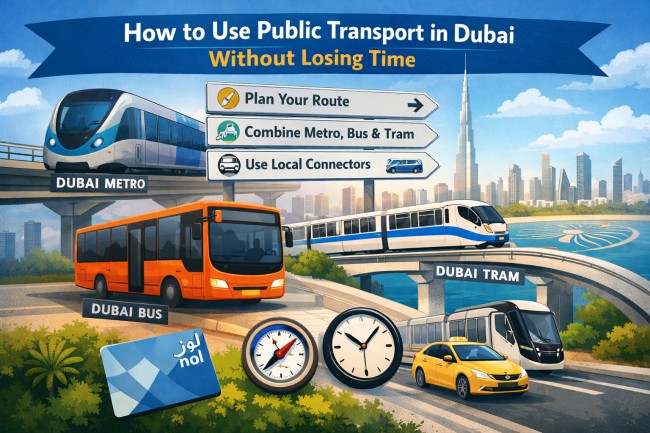
Learning how to use public transport in Dubai is less about memorising one route map and more about understanding how the city’s transport modes connect. Dubai works best when travellers combine systems instead of treating each one separately. Metro, bus, tram, taxi links, and district-specific routes all have different strengths. Once that becomes clear, the city feels far more manageable, especially for visitors trying to move efficiently between major destinations.
Why Dubai’s network rewards planning
Palm Monorail’s public-transit guide focuses on practical time-saving habits such as planning ahead, avoiding peak periods, choosing the right card, and keeping backup options in mind. Those recommendations matter because Dubai’s network is broad rather than simple. Efficiency comes from sequencing modes well, not from assuming one line will do everything.
Dragon Mart’s directions page provides a good example of how this works on the ground. It gives several ways to reach the destination, including taxi, metro-to-bus combinations, and direct bus access. That is a familiar Dubai pattern: many major places are reachable, but sometimes the fastest trip involves one main mode plus a short connection.
Palm Monorail adds another layer by showing how district transport can complement the citywide network. Its own site positions the monorail as a scenic way to move across Palm Jumeirah and connect key attractions. That helps travellers understand that using public transport in Dubai often means moving from the broader network into a local destination system.
What travellers should do first
The most useful starting point is to think in legs rather than in one complete route. For example, a metro journey may cover the longest distance, but the final part of the trip might require a bus, tram, monorail, or short taxi ride. Once travellers expect that structure, planning becomes easier.
This is where Palm Monorail fits naturally into the wider city picture. It is not a substitute for the whole network. It is a destination connector that makes one major district easier to navigate.
Three habits usually make the biggest difference:
- Plan before departure so interchanges are intentional rather than improvised.
- Avoid the busiest windows when possible to save time and reduce stress.
- Use the mode that matches the district instead of forcing one transport type into every part of the city.
Why local connectors matter in Dubai
Dubai’s size and geography mean that a citywide line can get you close without getting you all the way there. That does not make the system weak. It means travellers benefit from understanding how different modes are designed to work together. Destination connectors such as the Palm Monorail, and feeder links around major retail or leisure destinations, fill the final gap.
That is also why transport in Dubai can feel easier after the first day than before arrival. Once the logic of main lines plus local connections clicks into place, route choices become clearer and travel time feels more predictable.
This is particularly useful for visitors who only have a short stay and do not want to waste time correcting avoidable route mistakes. A little preparation changes the experience significantly. When travellers know which part of the journey belongs to the metro, which part may need a feeder connection, and which destinations operate their own local transport links, the city starts to feel more coherent.
It also changes how people think about transfers. In many cities, a transfer feels like a failure of the system. In Dubai, it is often just part of the intended design. Understanding that distinction helps travellers move with more confidence and make better use of the infrastructure that is already there.
Conclusion
Using public transport in Dubai effectively is mostly a matter of combining the right modes in the right order. The system rewards people who plan one step ahead, use district connectors where needed, and treat the network as connected rather than fragmented.