How to Optimize Limited Space in a Mobile Kitchen Layout
The mobile food industry has undergone a massive evolution over the last decade, transforming from a niche segment into a major sector of the modern culinary economy. Food trucks, custom catering trailers, and pop-up mobile bistros allow culinary entrepreneurs to bring diverse concepts directly to high-density crowds without the staggering overhead of brick-and-mortar real estate. However, operating outside a traditional building means inheriting a severe operational constraint: a radical limitation of physical workspace.
While a traditional commercial restaurant kitchen might span thousands of square feet, a mobile kitchen typically forces a chef to execute complex menus within an area smaller than a standard shipping container. In these high-intensity, hyper-compact spaces, every square inch carries immense operational weight. A poorly planned layout leads directly to staff collisions, slower ticket times, safety hazards, and physical exhaustion. Optimizing a mobile kitchen requires a disciplined approach to spatial engineering, kitchen ergonomics, and compact utility integration.
1. Implementing Rigid Ergonomic Workflow Zoning
The foundational step in maximizing a highly restricted culinary footprint is the absolute segregation of the space into distinct, non-overlapping workflow zones. In industrial kitchen design, this is managed by optimizing the “work triangle,” which connects storage, preparation, and cooking phases. In a long, narrow mobile environment, this triangle must stretch into a highly efficient linear assembly line.
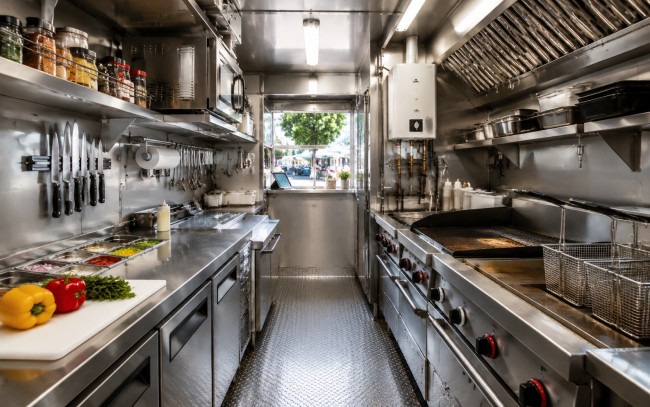
A standard mobile layout should flow sequentially from back to front or left to right. Raw inventory moves from compact refrigeration drawers directly onto preparation surfaces, passes to the primary thermal line (flat-tops, fryers, and ranges), and finishes at the assembly and exterior service window. Staff members should ideally operate within dedicated pivots—meaning they can reach their specific ingredients, utensils, and cooking surfaces simply by turning their bodies, rather than taking steps across the floorboards. This spatial discipline keeps the central aisle clear, minimizing physical friction when multiple line cooks are operating simultaneously under high-pressure rush periods.
2. Exploiting Vertical Volume and Multi-Tiered Hanging Systems
When floor space and countertop surfaces are strictly limited, kitchen designers must shift their perspective upward and fully exploit the vehicle’s vertical volume. Standard mobile kitchen walls are frequently underutilized, left as blank stainless-steel surfaces that could otherwise carry significant utility.
Installing heavy-duty, commercial-grade stainless-steel shelving right beneath the ceiling line creates an exceptional zone for storing lightweight, dry inventories, disposable service packaging, and back-up linens. Utilizing magnetic knife strips, heavy-duty ceiling pot racks, and adjustable wall-mounted spice rails keeps essential preparation tools completely off the primary workspaces. Additionally, sourcing under-counter refrigeration units featuring integrated work-top surfaces effectively doubles the functional capacity of the lower footprint, ensuring that no square foot is dedicated to a singular task.
3. Optimizing Utility Infrastructure and Compact Water Integration
A major challenge unique to mobile kitchen design is the management of essential utility infrastructure. Unlike static restaurants with endless access to municipal grids, a mobile unit must carry its own power, fuel, and water reserves. Bulky equipment configurations can rapidly consume valuable internal workspace, leaving cooks cramped and restricted.
Managing the plumbing network demands specialized attention, as local health departments mandate strict multi-compartment warewashing and hand-washing configurations that require a steady, safe supply of hot water. To preserve precious internal square footage, mobile operators must bypass traditional, space-consuming storage tank water heaters that hold large volumes of stagnant water. Integrating a compact, highly efficient on demand water heater propane unit is an exceptional strategy for streamlining this vital utility footprint. These tankless systems mount directly to internal wall studs or within compact exterior utility cages, drawing zero floor space. By rapidly heating water through a propane-fired heat exchanger only when a faucet handle is turned, these systems deliver a continuous, uncompromised stream of sanitizing hot water while preserving valuable interior space for additional ingredient storage or cooking equipment.
4. Selecting Flexible, Modular, and Multi-Functional Appliances
In a confined mobile layout, single-purpose appliances are an operational luxury that few concepts can afford. Sourcing specialized machinery that only executes one specific menu item creates massive spatial bottlenecks during the off-season or when menus pivot to meet shifting consumer demands.
Mobile operators should actively prioritize modular, multi-functional culinary equipment. For instance, investing in a high-velocity combination oven allows a single asset to bake, roast, steam, and rethermalize products within a singular, compact footprint. Selecting counter-top fryers that can be easily detached and swapped out for a charbroiler or an extra prep station grants the kitchen structural flexibility. This modular adaptability ensures that the physical line can be reconfigured between shifts, keeping the truck highly agile, uncluttered, and perfectly optimized for seasonal culinary rotations.
Conclusion
Optimizing a limited mobile kitchen layout is a precise exercise in spatial discipline, ergonomic planning, and strategic utility design. It requires an operator to move away from traditional kitchen assumptions and actively master the linear flow of labor, exploit vertical storage columns, select multi-functional hardware, and utilize space-saving tankless water heating systems. By systematically eliminating dead zones and minimizing structural clutter, culinary entrepreneurs can transform a cramped trailer into a high-yield, high-velocity commercial engine. Protecting this operational framework ensures that your staff can execute complex menus with absolute speed, safety, and long-term profitability, proving that exceptional culinary experiences are never dictated by the size of the room.