How Professional Artists Reclaim Detail in an Over-Censored AI World
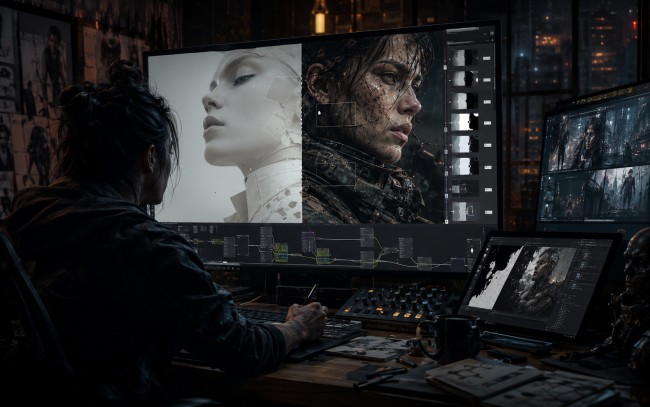
Generative art was sold as the ultimate tool for executing raw imagination. Yet, talk to any working concept artist today, and they will tell you it feels like painting with handcuffs on. Major tech platforms have bolted down their systems with aggressive safety filters. You try to render a medically accurate anatomical study, a gritty cyberpunk alleyway, or just realistic skin pores, and suddenly your prompt is blocked for violating a vague policy.
This over-correction is killing the soul of digital art. The commercial industry is being flooded with the dreaded “AI look”—smooth, plastic skin, sterile lighting, and an utter lack of visceral grit. Mainstream platforms are so terrified of edge cases that they sanitize every output, averaging out the shadows and scrubbing away the imperfections that make an image feel authentic.
To get their edge back, professionals are abandoning these walled gardens entirely. Instead, they are integrating no-restrictions AI image generators into their daily pipelines. These unfiltered systems aren’t about creating illicit material; they are about reclaiming the micro-details, the harsh lighting, and the complex textures that corporate models systematically erase. We need the dirt, the asymmetry, and the realism. Here is how top-tier digital artists are actually bypassing the blur and getting their details back.
The Anatomy of the “Plastic Wrap” Effect
Before you can fix the problem, you have to understand why it happens. Why do mainstream AI images look so uniformly bland? It all comes down to the tuning process, specifically RLHF (Reinforcement Learning from Human Feedback).
Corporate models are deliberately trained to produce safe, pleasing, mathematically average aesthetics. When you feed a highly detailed, moody, or complex prompt into a standard commercial generator, the model defaults to its “safe” baseline. This results in several frustrating visual downgrades:
- Texture Washing: Rust, dirt, fabric fibers, and skin wrinkles are smoothed out into flat, lifeless gradients. A worn leather jacket ends up looking like cheap vinyl.
- Anatomical Homogenization: Distinct, asymmetrical facial structures are morphed into the same generic, symmetrical face you see on every AI influencer account.
- Lighting Normalization: High-contrast chiaroscuro (the harsh interplay of light and deep shadow) is aggressively lightened to ensure every corner of the image is visible, ruining the cinematic tension.
- Contextual Refusals: Essential elements for fantasy art (like weaponry), dark themes, or accurate medical diagrams trigger immediate system blocks, halting your workflow completely.
Moving to Open-Weights and Local Pipelines
The most effective solution isn’t trying to outsmart a locked prompt box with clever vocabulary; it’s changing the engine entirely. By migrating to open-weight ecosystems, you bypass the corporate safety layers and gain direct access to the raw rendering data.
Working with unfiltered models gives you back the steering wheel. Because these models haven’t been heavily lobotomized to avoid anything “difficult,” they actually listen to negative prompts. If you tell an open model to avoid “smooth, plastic, perfect, studio lighting,” it actually generates the gritty, chaotic textures you asked for. The light scatters through glass realistically, shadows fall aggressively, and characters look like they actually exist in the world rather than floating in a sterile studio.
Tactical Workflows for Maximum Fidelity
Simply switching platforms isn’t enough. Professional artists use highly specific, multi-stage workflows to force the AI to render high-fidelity details. If you want to strip the “AI look” from your work, you need to implement these techniques.
Targeted Noise Injection
Standard generators start with noise and refine it into an image. To break the smoothness, artists use a technique called targeted noise injection. By deliberately adding a layer of digital film grain or fractal noise to a base image, and then running it through a low-strength “img2img” (image-to-image) pass, you force the AI to process that noise as texture. The engine is forced to find edges and micro-details where it would normally render a flat surface, creating a tactile, photographic feel.
Manipulating CFG Scales and Dynamic Thresholding
Mainstream tools lock your settings to ensure you always get a “usable” (but boring) picture. In a professional workflow, you must take control of your CFG (Classifier Free Guidance) scale.
- Low CFG (3-5): The model ignores your prompt and does what it wants, usually resulting in a soft, generic image.
- High CFG (10-15): The model adheres strictly to your text.
By cranking the CFG scale up and using dynamic thresholding extensions to prevent the colors from “frying” or burning out, you can force the model to render the exact harsh shadows, sharp highlights, and intricate background details you requested.
The Power of Granular Loras
Instead of relying on the base model to know what “weathered metal” looks like, professionals stack highly specific Loras (Low-Rank Adaptations) on top of their prompts.
- Use a Lora specifically trained on 35mm film grain.
- Use a Lora trained purely on skin pores and dermatological imperfections.
- Use a Lora dedicated to extreme architectural decay.
These mini-models act as corrective layers. They override the base model’s tendency to smooth things out, forcing it to render the exact micro-textures you need to make the scene believable.
The Inpainting Exploit: Building Modular Scenes
One of the biggest frustrations with heavily censored systems is that a single “trigger word” ruins the whole generation. If you are designing a concept piece for a gritty detective game, generating a dimly lit crime scene might get blocked entirely.
To bypass this, artists use a modular inpainting strategy.
- Generate the Safe Base: You generate the basic geometry of the room—walls, a desk, a window. The filter allows this because it’s just furniture.
- Unrestricted Regional Prompting: You take that base image into your unfiltered workspace. Using an inpainting brush, you mask out specific areas and prompt for the restricted details—the shattered glass, the blood spatter, the chaotic mess on the desk.
Because you are building the scene piece by piece using an unrestricted engine for the heavy lifting, you completely bypass the global safety triggers while maintaining absolute control over the composition.
Taking Raw Art into Motion
Generating a high-detail static image is a massive victory, but in today’s market, clients want motion. This is where the workflow usually breaks down again. Most standard video generators will instantly wash out those hard-earned details the second the frame moves, turning your gritty character back into a plastic doll.
To prevent this quality loss, professionals are leaning on orchestrators to manage the transition from static to dynamic. This is a scenario where a platform like CrePal becomes highly effective. Acting as an AI director agent, CrePal handles the integration between your detailed base image and top-tier video rendering models. Its core advantage is visual consistency; you can use natural language chat to tweak the camera movement or adjust the pacing without destroying the specific textures and lighting you worked so hard to establish in the initial generation phase.
The Bottom Line
The gap between amateur AI enthusiasts and working professionals is widening, and it all comes down to control. The commercial AI tools designed for the masses will continue to prioritize safety, smoothness, and predictability. They are built for marketing teams who need a quick stock photo, not for artists who need to execute a precise vision.
If you want your work to stand out, you have to stop fighting the filters of walled gardens. Adopt unrestricted tools, master the technical settings that govern texture, and build your scenes modularly. Reclaiming your detail isn’t just about making better art; it’s about reclaiming your autonomy as a creator. The tools are out there—you just have to be willing to take the training wheels off.