The Benefits of High-Speed Cutting in Manufacturing
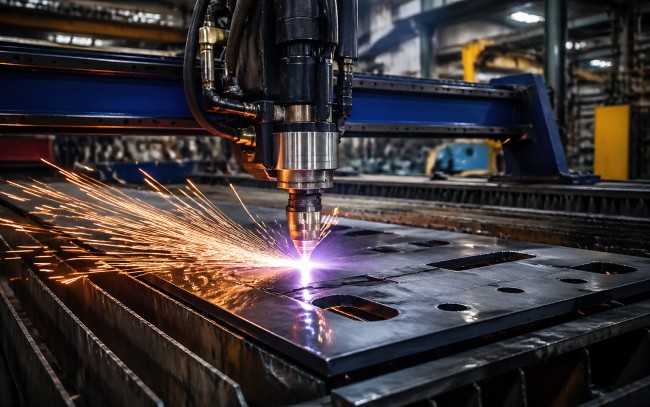
In today’s competitive manufacturing landscape, speed and precision aren’t luxuries; they’re survival requirements. If you’re still relying on conventional cutting methods, you may be leaving significant efficiency gains on the table. High-speed cutting, and specifically high-speed plasma cutting, is transforming what’s possible on the shop floor. Here’s why you should be paying close attention.
What High-Speed Cutting Actually Means for Your Operation
High-speed cutting refers to material removal processes performed at dramatically elevated feed rates and cutting velocities. In plasma cutting, this translates to a superheated, ionized gas jet severing conductive metals at speeds that traditional methods simply can’t match. It’s no wonder more companies are buying a plasma cutter. When you upgrade to a high-speed plasma cutter, you’re not just cutting faster; you’re fundamentally changing your throughput capacity, your cost structure, and your competitive position.
You’ll Dramatically Increase Throughput
The most immediate benefit you’ll notice is output volume. A modern high-speed plasma cutter can process steel, aluminum, and stainless steel at rates several times faster than conventional plasma or oxyfuel systems. When you cut faster, you complete more jobs per shift, reduce backlog, and take on higher-volume contracts with confidence. If your shop runs multiple shifts, the compounding effect on your monthly output is substantial. More parts out the door means more revenue without proportionally increasing labor or overhead.
Your Cut Quality Improves, Not Just Your Speed
Here’s what surprises many manufacturers: going faster with a high-speed plasma cutter often produces cleaner cuts. That may seem counterintuitive, but the science is straightforward. At optimal high-speed settings, the plasma arc interacts with the material for a shorter dwell time, which reduces heat input. Less heat means a smaller heat-affected zone (HAZ), less warping, reduced dross buildup on the cut edge, and tighter dimensional tolerances. When you minimize post-processing like grinding and deburring, you’re saving labor hours that go straight back into your bottom line.
You’ll Reduce Operating Costs Over Time
The upfront investment in a high-speed plasma cutter is real, but so is the return. When you cut faster and cleaner, you use less consumable electrode and nozzle material per part. Your gas usage per cut drops because the process is completed more efficiently. You also reduce scrap rates, since better cut quality means fewer rejected parts. Factor in the labor savings from reduced secondary operations, and the total cost per part drops significantly. If you’re currently outsourcing precision cutting work, a high-speed plasma cutter may let you bring that work in-house and recapture that margin entirely.
Your Workforce Becomes More Productive
When you equip your team with a high-speed plasma cutting system, especially a CNC-integrated one, you’re multiplying their effective output without demanding more hours. Modern systems handle complex geometries, nested cuts, and material optimization automatically. Your operators spend less time on manual setup and more time running production. You also reduce the skill burden for individual cuts, which makes training new operators faster and lowers the risk of human error disrupting a production run.
You Gain a Real Competitive Advantage
Ultimately, adding a high-speed plasma cutter to your operation changes the types of jobs you can confidently bid on. You can promise a faster turnaround and guarantee tighter tolerances. You can handle thicker materials and more complex geometries. When a customer needs 500 precision-cut steel components in 72 hours, you want to be the shop that says yes while your competitors hesitate.
High-speed cutting isn’t a future technology; it’s a present-day competitive necessity. If you’re serious about scaling your manufacturing operation, a high-speed plasma cutter deserves a hard look at your next capital planning discussion.