Underfloor Heating: Pros, Cons & Is It Right For You? Radiator Outlet Explains Why
Considering underfloor heating for your home? At Radiator Outlet, we understand the importance of choosing the right heating solution. This guide will delve into the world of underfloor heating, exploring its advantages and disadvantages, helping you decide if this efficient heating system is the right choice to heat your home.
Understanding Underfloor Heating
What is Underfloor Heating?
Underfloor heating, or floor heating, is a type of central heating that provides radiant heat from beneath the floor. Unlike traditional heating systems that rely on radiators, an underfloor heating system uses heating elements installed beneath the floor surface to evenly distribute warmth. This radiant floor heating offers a consistent and comfortable level of comfort throughout the room, making it a desirable alternative to conventional heating system options. With underfloor heating, the entire floor becomes a heat source.
How Underfloor Heating Works
Underfloor heating operates by circulating warm water or electricity through heating elements beneath the floor. In water underfloor heating, heated water from a heat pump or boiler flows through pipes, warming the floor. Alternatively, electric underfloor heating systems use electric heating cables to generate heat. Both methods transform the floor into a large, low-temperature radiator, emitting radiant heat that warms the room from the ground up. This efficient heating method minimises heat loss and creates a more evenly heated space compared to radiator-based systems.
Types of Underfloor Heating Systems
Here’s a breakdown of the primary underfloor heating systems available:
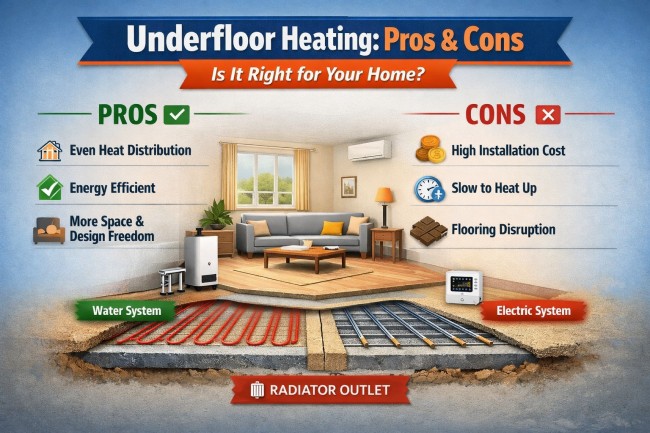
- Water (hydronic) underfloor heating: This system circulates warm water from a boiler or heat pump through pipes beneath the floor. It is generally more energy-efficient for larger areas and new builds.
- Electric underfloor heating: This includes systems installing electric cables or mats to generate heat. While often easier and cheaper to install initially, particularly for smaller areas, the energy consumption is higher.
Weighing the pros and cons of each type is crucial for an informed decision, as both offer unique benefits.
Pros and Cons of Underfloor Heating
Advantages of Underfloor Heating
Here are some of the advantages of underfloor heating. Notably, it offers several benefits like:
- Even heat distribution, eliminating cold spots common with traditional heating systems.
- Lower energy consumption, especially when paired with a heat pump or renewable energy sources.
Underfloor heating also allows more design freedom without bulky radiators. The advantages of underfloor heating are hard to ignore.
Cons of Underfloor Heating
Despite the underfloor heating pros and cons, there are important factors to consider. Here are some potential drawbacks:
- The installation cost can be higher than traditional heating systems.
- Underfloor heating operates slower to heat up or cool down compared to radiators.
The type of floor covering can also affect its efficiency, and repairs can be disruptive, as accessing the heating elements beneath the floor requires lifting the floor surface.
Weighing the Pros and Cons
When deciding if underfloor heating is right for you, consider the pros and cons of underfloor heating. If you value consistent warmth and potential energy efficiency, the advantages of underfloor heating may outweigh the disadvantages. For those sensitive to initial cost or requiring rapid temperature changes, a different heating system may be more suitable. Evaluating your needs ensures you choose the heating worth investing in.
Benefits of Installing Underfloor Heating
Improved Comfort and Warmth
The most noticeable benefit of installing underfloor heating is the improved comfort. Radiant heat warms the room evenly, eliminating cold spots. Unlike conventional heating system options, which can create drafts, underfloor heating provides a consistent level of comfort. With underfloor heating in your home, the entire floor becomes a heat source, creating a warm and inviting environment. This is especially beneficial for children playing on the floor.
Energy Efficiency and Heating Bills
Underfloor heating can contribute to energy efficiency and lower heating bills. Underfloor heating operates at a lower temperature than radiators while maintaining the same level of comfort. This can lead to reduced energy consumption, especially when using a wet underfloor heating system with a heat pump for energy savings. Although the cost of installing electric underfloor heating may be lower, it is crucial to consider the long-term energy consumption, which will impact the heating bill.
Space-Saving Solutions
Radiators take up valuable wall space, restricting furniture placement and room design. One of the benefits of installing underfloor heating is that it frees up this space. As the heating elements are hidden beneath the floor in radiant heating systems, there are no visible radiators, offering greater design flexibility. This space-saving heating solution, such as a radiant floor heating system, is particularly beneficial in smaller rooms where every inch counts. Having underfloor heating allows a much better look to your house and enhances the overall home heating experience.
Installing Underfloor Heating
Steps for Installing Underfloor Heating
Installing underfloor heating, whether a water underfloor heating system or electric underfloor heating, involves several key steps. First, assess your existing floor structure and ensure it is suitable for the heating installation. Next, plan the layout of the heating elements beneath the floor, considering the floor covering to maximise efficient heating. Installing electric underfloor heating is generally easier for DIY enthusiasts, while water systems often require professional installation. Ensure proper insulation beneath the underfloor heating system to minimise heat loss.
Considerations for Electric Underfloor Heating
When installing electric radiant underfloor heating, energy consumption is a significant consideration for overall heating costs. Although the cost of installing electric radiant underfloor heating may be lower upfront, the long-term heating costs can be higher compared to water systems. Electric heating systems are best suited for smaller areas due to their higher energy consumption. Always use a qualified electrician to ensure safe and compliant wiring. Consider using a thermostat to efficiently control how the underfloor heating operates and minimise the heating bill.
Cost Considerations and Budgeting
Budgeting for the cost of installing underfloor heating involves considering several factors. The installation cost varies depending on the type of heating system. Water systems generally have a higher initial cost due to the complexity of the heating installation, while electric systems are often cheaper to install. Factor in the heating costs of materials, labour, and any necessary floor preparation for your underfloor heating installation. Although the cost of installing may seem daunting, consider the long-term benefits of underfloor heating and energy efficiency. One thing to note is that there are cheap underfloor heating options available, so the initial outlay isn’t too expensive.
Is Underfloor Heating Right for Your Home?
Evaluating Your Heating Needs
To determine if a floor heating system is the right heating solution, assess your heating needs thoroughly. Consider the size of the area you want to heat, your desired level of comfort, and your budget. If you value consistent warmth and energy efficiency, the advantages of underfloor heating may be beneficial. However, if you need rapid temperature changes, conventional heating system options may be more suitable. Carefully consider the pros and cons of underfloor heating.
Assessing Your Property’s Suitability
Before installing a floor heating system, assess your property’s suitability for underfloor heating installation. Ensure your existing floor structure can support the system. Consider the floor covering, as some materials are more conducive to radiant heating systems than others. If you have a new build, installing underfloor heating is easier than retrofitting an existing property. Weigh the pros and cons of underfloor heating against the benefits of underfloor heating in relation to your property’s characteristics.
Conclusion: Making the Right Choice
Choosing the right heating system, including options like electric radiant or wet underfloor heating, is a significant decision. Underfloor heating offers numerous benefits, including improved comfort, energy efficiency, and space-saving advantages. However, there are also cons of underfloor heating, such as higher installation costs and slower response times. Weigh the pros and cons of underfloor heating carefully against your heating needs and potential energy savings. By considering all these factors, you can make an informed decision about whether underfloor heating is the heating worth investing in for your home.