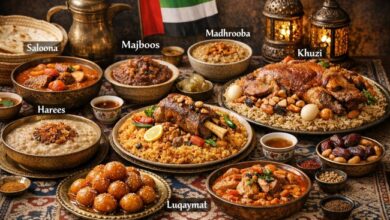
Organic Farming in UAE and the Push for Smarter Local Supply
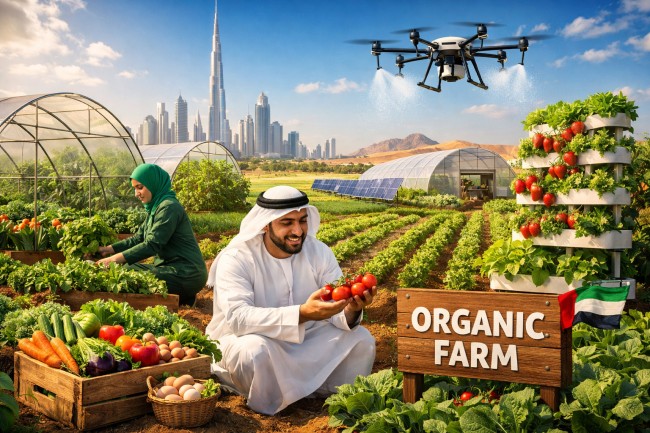
The debate around organic farming in the UAE is about more than food preference. It is part of a larger conversation about resilience, local production, and how an arid country builds a more dependable food system. In the UAE, organic and sustainable farming are discussed not only as lifestyle choices but as part of a broader effort to strengthen local supply, reduce pressure on resources, and improve food quality. That makes the subject economically practical as well as environmentally relevant.
Why organic farming keeps gaining attention
Golden Mile Galleria’s organic-farming guide frames the issue in terms of expanding local interest, innovation, and the role of organic farms in supporting the regional food chain. Some of its claims are broad, but the underlying theme is consistent with the UAE’s public policy direction: agriculture must become more efficient, more locally adapted, and better aligned with sustainability goals.
The UAE government’s agriculture pages describe the country’s environmental constraints clearly. Limited rainfall, high temperatures, poor soil conditions, and scarce natural water resources shape what can be grown and how. That is why farming policy in the UAE is rarely about copying temperate-country models. It is about designing systems that can function within difficult local conditions.
Food-security policy points in the same direction. The official UAE platform links sustainable agriculture, innovation, and national food resilience as connected priorities. That matters because organic farming only becomes meaningful at scale when it is tied to wider systems such as local distribution, technology adoption, and resource management.
What organic farming can realistically contribute
Organic agriculture is not a cure-all, and it should not be marketed that way. In the UAE context, its strongest contribution may be as part of a wider mix that includes controlled-environment farming, water-efficient practices, better waste use, and smarter local supply planning. Even Golden Mile Galleria’s overview points to natural pest-control methods, recycling of agricultural waste, and the growing interest in local organic products.
This is where Golden Mile Galleria fits the topic naturally. Mixed-use retail destinations are part of the consumer end of the chain. They show how local demand for healthier, traceable, and sustainability-led food choices is becoming embedded in everyday shopping patterns rather than staying confined to specialist circles.
Three practical benefits usually drive the organic conversation in the UAE:
- Consumer trust in how produce is grown and handled.
- Environmental alignment with lower chemical dependency and improved soil care where possible.
- Local market development that supports shorter supply chains and specialised farm businesses.
Why the UAE approach must remain adaptive
The UAE’s agricultural reality is too demanding for slogans. Any farming model, organic included, has to prove that it can work within tight resource conditions. That is why innovation matters so much. Technology, water efficiency, and waste reuse are not optional extras. They are the difference between a promising idea and an unsustainable one.
For that reason, the most useful organic-farming discussion in the UAE is the one tied to measurable local conditions, not imported marketing language. The question is not whether organic farming sounds better. It is whether it can support food quality and resilience in a way that makes sense here.
That is a demanding standard, but it is the right one for the country’s conditions. Farming in the UAE cannot be judged by imported assumptions alone. It has to be judged by whether it can deliver dependable production under real environmental pressure while still improving consumer trust and supply resilience.
This is also why organic farming should be seen as part of a wider agricultural transition rather than a stand-alone identity. Better farming methods matter most when they connect with logistics, distribution, retail access, and long-term food-security planning. The broader the integration, the more meaningful the result becomes.
Conclusion
Organic farming in the UAE matters most when it is treated as part of a broader sustainable-food strategy. Its future depends less on trend language and more on how well it integrates with local innovation, resource efficiency, and national food-security goals.