Traditional Food of UAE With Names That Still Define the Table
The appeal of traditional food of UAE with names is that each dish carries more than flavour. It carries memory, geography, and social custom. In the UAE, food reflects desert heritage, coastal trade routes, hospitality, and family ritual as much as it reflects ingredients. That is why traditional dishes remain important even in a city as international as Dubai. They still anchor the local table and give residents and visitors a direct route into Emirati culture.
Which Emirati dishes remain most recognisable
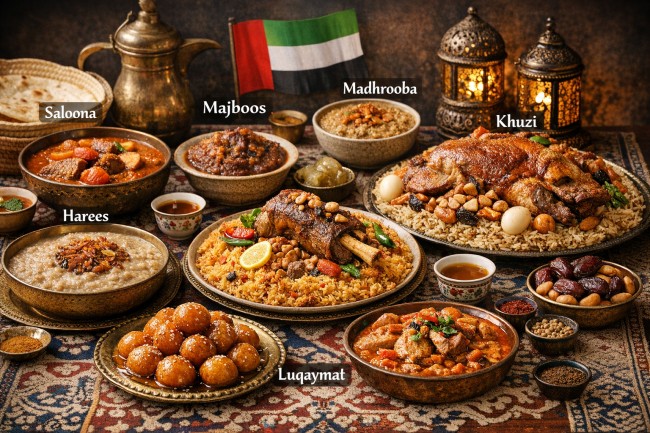
The Ibn Battuta Mall guide points to several names that regularly appear in discussions of Emirati food: harees, majboos, madhrooba, saloona, khuzi, and luqaymat. Those dishes are different in texture and occasion, but they share a common logic. They rely on grains, rice, meat, stock, spice blends, and slow-building depth rather than decorative complexity.
Visit Dubai’s food guide reinforces the same idea by presenting Emirati cuisine as a living part of the city’s dining scene rather than a museum tradition. That matters because traditional dishes stay culturally powerful when they remain available, served, and recognised across generations. Food culture weakens when it is reduced to festivals or heritage displays alone.
Some dishes are strongly tied to gatherings. Harees, for example, is often associated with effort, patience, and shared meals because of its long preparation. Majboos remains one of the most familiar rice-based dishes in the Gulf. Luqaymat continues to carry a special place as a sweet that appears naturally in festive and social settings.
Why Emirati food still matters in a global city
Dubai’s international dining reputation can sometimes obscure the importance of local cuisine, but the two realities are not in conflict. In fact, the city’s food identity becomes stronger when global dining exists alongside a visible local culinary tradition. That is one reason venues such as Ibn Battuta Mall and official tourism guides continue to spotlight regional dishes. Visitors increasingly want more than cosmopolitan abundance. They want some sense of what belongs specifically to the UAE.
Traditional food answers that need because it tells a story about place. The use of wheat, rice, meat, spices, yoghurt, and slow cooking reflects environmental conditions, trade relationships, and household practice. Even where dishes overlap with wider Gulf, Indian Ocean, or Arab culinary traditions, the Emirati table gives them its own context.
How to approach traditional food without turning it into nostalgia
The best way to understand Emirati food is to see it as active, not frozen. These dishes are important because people still cook, serve, and adapt them. They sit comfortably inside modern restaurant culture while preserving strong links to home cooking and communal dining. That flexibility is one reason they have endured.
For anyone exploring Emirati cuisine, names matter because names hold the memory of the dish. Learning the dish names is part of learning how the meal fits into family life, celebration, and hospitality.
That is also why the names themselves deserve attention. They help preserve a local vocabulary of cooking and eating that might otherwise be overshadowed by the global restaurant language of an international city. When people recognise harees, majboos, khuzi, or luqaymat by name, they are doing more than ordering food. They are participating in the cultural continuity that keeps local cuisine visible and meaningful.
Traditional dishes also remain useful because they are not isolated from everyday life. They move between home tables, festive occasions, restaurant menus, and tourism narratives without losing their basic identity. That flexibility is one reason Emirati food still feels alive rather than archived.
Conclusion
Traditional Emirati food remains central because it connects modern Dubai to older rhythms of hospitality and shared eating. The names themselves still matter: they identify dishes, but they also preserve the cultural vocabulary of the table.