Why Garden Communities Are the Future of Sustainable Development
When we talk about building more homes, the conversation usually lands in one of two places: focus on suburban growth, or further densify existing cities. The problem is that both approaches tend to create sustainability problems – just in different forms.
Suburban growth often separates homes from shops, schools, and services – making driving the easiest, and sometimes only, option. This means more car journeys, more emissions, and more pressure on roads. It also means more pressure on infrastructure – as utilities, healthcare, and public services become harder and more expensive to deliver well.
While suburban growth spreads people out, densifying cities packs people in – often at the cost of green space, comfort, and capacity. This often means trading away parks, playgrounds and other outdoor spaces, in exchange for more housing. In practice, “more homes” becomes the only goal, while the wider systems that make communities work – like transport, landscape, social infrastructure, and governance – go by the wayside.
What’s missing is a model that treats housing, nature, transport, and community life as one joined-up system. That’s exactly where garden communities come in.
What are garden communities?
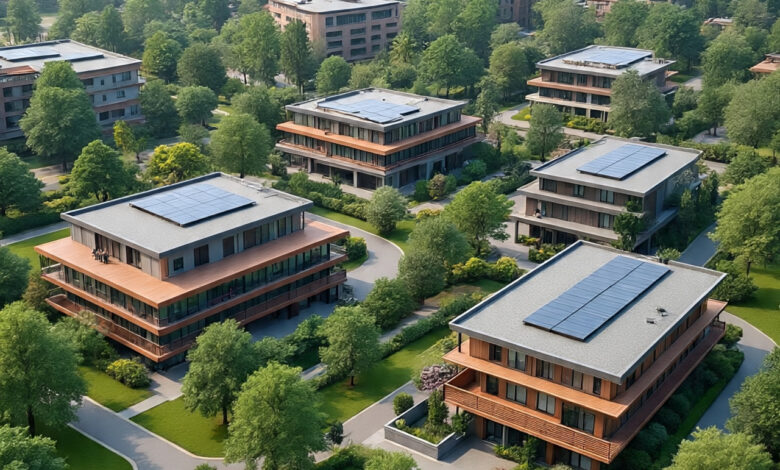
Garden communities are primarily nature-led development sites. They are designed to combine the benefits of urban living –access, walkability, and services – with the space, greenery, and breathing room people often associate with country living. They’re more than simply housing estates with extra trees. They are complete, connected communities where homes, schools, workplaces, parks, and transport are planned together as one system.
Inspired by garden city principles, modern garden communities are built to address important social challenges: public health, housing affordability, climate resilience, and the need to reduce car dependency. Their defining feature is intentional, strategic design. The kind you only get with expert masterplanning architects in London. They make green space a key design priority – including parks, playgrounds, natural features, and green corridors wherever possible. They also ensure that sustainable infrastructure and transport are fully integrated from day one. In short, garden communities are built to function as real communities, rather than collections of homes.
Key Characteristics of Garden Communities
Integrated Green Space
In a garden community, green space is taken seriously. It’s planned as a connected system: parks, playgrounds, green corridors, tree-lined streets, nature reserves, and natural habitats that run through the development and link into the wider landscape. This kind of integration supports biodiversity, improves air quality, reduces flood risk through natural drainage, and helps cool neighbourhoods during hotter summers. Just as importantly, it gives people easy, everyday access to nature.
Infrastructure & Design
Garden communities aim to create real homes and connected communities. That means building housing alongside the things that make daily life work: schools, healthcare, community centres, sports facilities, and local shops. Garden communities are typically based on walkable neighbourhoods, a mix of housing types, and a clear design style – so the community grows with character rather than uniformity. They also prioritise good, sustainable infrastructure: utilities, digital connectivity, water management, and energy networks are built into the plan, not squeezed in later.
Sustainable Travel
Garden communities are planned around movement patterns. They typically prioritise a clear hierarchy: walking and cycling first, then public transport, then private car use. This includes direct walkable streets, safe cycle paths, and good public transport connections. It also includes traffic management strategies. This is because garden communities aim to reduce emissions while improving everyday convenience.
Governance And Stewardship
Garden communities tend to take governance and stewardship more seriously from the start. That might mean setting up a community trust, a long-term management body, or a partnership between local authorities, landowners, and residents. The point is to create a structure that can maintain green spaces, fund upkeep, manage community buildings, and protect the original vision of the place over time. In other words, governance and stewardship are what turn a “nice development” into a place that stays healthy, green, and well-functioning for decades.
Why Garden Communities Deliver Better Sustainability Outcomes
Garden communities are just greener— they’re also most sustainable. They tend to perform better because they’re designed as complete systems. When green space is integrated from the start, it does far more than improve the view. It supports biodiversity, improves air quality, reduces flood risk through, and helps neighbourhoods stay cooler during heatwaves. In other words, sustainability and climate resilience are built into the local landscape, rather than added later as mitigation measures.
Garden communities also make low-carbon living easier. When people have schools, shops, parks, and community facilities within easy walking distance, they are more likely to make these types of trips on foot. And when people know they can rely on walkable pathways and regular public transport, they are more likely to use them. This, combined with long-term stewardship, creates places that are greener and more sustainable over the long term.
The Role of Masterplanning: How Sustainability Gets Locked In
Garden communities don’t become sustainable by accident – they become sustainable by design. That’s where masterplanning comes. It connects the big moving parts early: where homes go, where green space sits, how people travel, where schools and services are located, and how infrastructure is delivered over time. Without that coordination, even well-intentioned developments can end up car-dependent, fragmented, and short on the things that make daily life work.
Masterplanning also makes sure sustainability is delivered in the right sequence, not just promised in principle. It sets out what needs to happen first – like key bus routes, safe walking and cycling connections, primary schools, local centres, and usable green space – so early residents aren’t living in a place that only becomes functional years later. It also maps out how later phases will build on those foundations, adding more services, transport capacity, and community facilities as the population grows. By planning delivery stages upfront, masterplanning helps garden communities stay connected, liveable, and genuinely sustainable from day one.
Why Garden Communities Are the Future of Sustainable Development
Garden communities are emerging as one of the most convincing answers to a difficult challenge: how to deliver new homes without repeating the environmental and social problems of conventional growth. They offer a model that sits beyond the old suburb-versus-city debate, combining walkability, access to nature, and complete local services in a way that supports sustainable development.