Moving Coast to Coast: How to Plan a Seamless Long-Distance Interstate Relocation
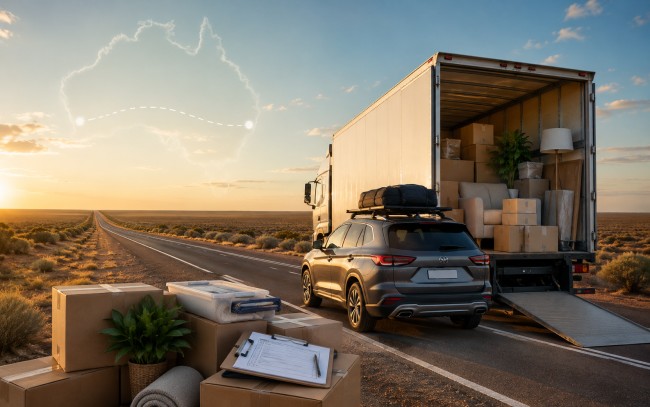
Moving across Australia from east to west (or vice versa) could take a lot out of you. But it doesn’t have to! With some cautious preparation and a lot of flexibility, you can make your long-distance move as easy as it can get.
Downsize Before You Price Anything
Long-distance moves will be charged by the amount of space your belongings take up on the truck. Guess what? It’s not worth your while to pay to move a box of your kid’s graded homework from last year. That one weird thing your dog fished out of the trash six months ago? Not worth it.
If you’re hiring a full-service mover, this isn’t the easiest thing in the world to estimate. You can make broadest brush stroke guesses by counting how much furniture you own and how many big electrical items are getting shipped – couches, dressers, fridges, and TVs being the biggest space eaters.
One-room studios average 350 cubic feet of truck space. Factor on about half that for each additional room – so a two-bedroom apartment would use around 525 cubic feet, three bedrooms about 775, and a full house about 1,800 cubic feet. Increasingly, good movers also calculate volume online, asking you to add everything from bookshelves to rolly chairs and funky lamps to your virtual list.
WA Biosecurity Is Not Optional
Western Australia has its own biosecurity inspections at the border and they’re serious. They’re specifically checking for soil, seeds, plant material, and organic residue in or on outdoor items such as garden furniture, tools, lawnmowers, bicycles, golf clubs, and potting equipment.
Clean everything that’s been outside. Make sure all soil and plant material has been removed from your tools and equipment. Don’t pack or send any soil, potting mix, plants, or plant product in your consignment. If prohibited material is found the whole item may be seized or required to be treated or returned at the importer’s expense. This isn’t just red tape, WA’s agricultural and ecological environment is different, and these rules help protect it.
The current guidelines are easily available and are updated regularly. Your moving company should be familiar with them but it doesn’t hurt to do a quick check yourself.
The Vehicle \\decision Is More Financial Than It Feels
Many individuals decide to drive their vehicle to the other side because they think it’s cheaper and they know the route. Don’t make that choice until you actually add things up.
The Eyre Highway runs over the Nullarbor for about 4,000 kilometres. By transport industry safety standards, that’s 40 to 45 hours of solid driving, and most professional advice suggests dividing it over at least five to six days for fatigue and because central Nullarbor driving at night is a terrible idea. So that’s five or six nights of accommodation, a need to pay for fuel across the full distance, meals on the road, and the mechanical strain on a motor vehicle pushed to its limits in heat and lonely travel conditions.
For a lot of people, the real price gulf between car transport newcastle to perth and a self-drive — once you include accommodation, fuel, and food — is smaller than you might expect. And you’re still committing to nearly a week on the highway through some of the most remote terrain in the country. Whether you’d enjoy that journey or not, it’s worth running the numbers on both options before making a decision. Take the instinct out of it and let the numbers do the talking.
If you do choose to transport, depot-to-depot conveyance (where you deliver and collect from central hubs and not your doorstep) can cut the price a bit more if it’s logistically viable.
Get Transit Insurance, Not Assumptions
Home contents insurance typically doesn’t cover your stuff while it’s in a truck crossing state borders. Why would it? You’re buying house and contents, not truck and contents. Problem is, people only find this out after something does get broken en route, not before.
A dedicated transit policy covers your belongings against loss or damage while they’re moving – highway accidents, weather events, theft during stops. It also requires you to produce an inventory manifest, which is actually useful: a detailed record of what you packed, where it is, and what it’s worth is the document that makes a claim possible if something goes wrong.
Ask your removalist what they provide, and what it actually covers. Then weigh up whether more favorable terms come with a standalone policy. But don’t wimp out with a move of this length.
Build Your Admin Timeline Around Eight Weeks
Each state has its own timeframe for updating your driver’s licence, car registration and electoral details after you move. Eight weeks works fine as a window when you’re planning it right – your first fortnight of that, however, should be spent collecting a list of every account, subscription and registration that includes your address. Your second week and a half should be invested into organizing a mail redirection through Australia Post from the date you depart, not the date you arrive. School enrolments, if you have school-aged kids, often require proof of address to make your application – raise this with the schools in question during week one also. The remaining time needs to be used efficiently as well. Utilities need to awkwardly be switched on and off at the exact same time as electricity, gas and internet providers operate on state-based grids and some don’t operate in both parts of the country.