How to Handle Waste Properly During a Renovation
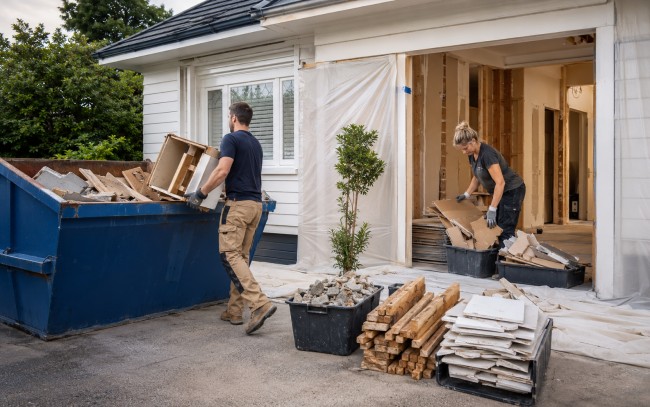
When you picture a renovation, you picture the good bits. The new kitchen, the knocked-through wall, the room that finally works the way you always wanted. What almost nobody pictures is the rubbish, and yet the rubbish is often the thing that quietly turns a smooth project into a stressful one. A renovation generates a staggering amount of waste, far more than most people expect, and if you haven’t thought about where it’s all going before you start, you’ll find out the hard way somewhere around day three when the hallway is impassable and the garden is full of broken plasterboard.
Handling waste properly isn’t the glamorous part of a project, but getting it right from the outset saves you money, keeps the job moving, protects you from some genuine legal pitfalls, and makes the whole experience far less miserable. It deserves a bit of planning up front rather than being left to sort itself out, because it never does sort itself out. Here’s how to think it through before the first wall comes down.
Why Waste Planning Deserves Thought Up Front
The core mistake is treating rubbish as something to deal with later, when in reality it’s one of the first things worth planning. Even a modest renovation produces an enormous volume of material, since old fixtures, torn-out flooring, stripped tiles, packaging from everything new, and general debris add up with alarming speed. A single room refit can fill more skips than people imagine, and a whole-house project is on another scale entirely.
The reason this matters beyond tidiness is that unmanaged waste actively slows the work down. Piles of debris in walkways are trip hazards, they get in the way of tradespeople trying to do their jobs, and they create a chaotic, unsafe site that makes everything harder and slower. A messy site is a dangerous and inefficient one, and clutter has a way of denting morale on a project that’s already demanding.
Deciding how waste will leave the property before it starts accumulating means the job stays clear, safe, and moving, which is worth real money when you’re paying trades by the day. Planning disposal early is one of those unglamorous decisions that pays you back throughout the entire project.
Knowing What You’re Dealing With
Before you choose how to get rid of your waste, it helps to understand that not all of it is the same, because different materials need handling differently. The bulk of renovation waste tends to be heavy construction debris, meaning rubble, broken masonry, old tiles, and concrete, which is dense and weighty. Alongside that you’ll generate lighter bulky waste like timber, old units, and packaging, and if your project touches the garden you’ll have green waste too, which is different again.
Then there are the materials that need genuine care. Certain things commonly found in older homes, along with items like paint, chemicals, and some electrical goods, count as hazardous or special waste and cannot simply be thrown in with the general rubble. Older properties in particular can hide materials that require professional handling, and if you suspect anything of that nature, the right move is to stop and get specialist advice rather than risk it.
Sorting your waste by type isn’t fussiness, it’s what makes proper disposal possible, keeps you safe, and often saves money, since mixed loads are harder and pricier to deal with than separated ones. Knowing what you’ve got is the first step to getting rid of it correctly.
Choosing the Right Disposal Method
Once you know roughly what and how much you’re dealing with, you can choose how to remove it, and for most renovations of any size the workhorse solution is a skip. Skips suit renovation waste well because they handle mixed heavy material and sit on site so you can fill them as you go, but the important decision is size. Too small and you’re paying for multiple collections, too large and you’re paying for space you don’t use, so matching the skip to the realistic volume of your job is where a bit of judgement pays off.
For a substantial renovation producing a lot of heavy rubble and construction debris, a builders skip is usually the sensible choice, since it’s designed for exactly that kind of dense, weighty material and offers the capacity a serious project demands.
For smaller jobs, a more compact skip or alternative collection may be all you need. Access is the other thing to think through before booking, because you need somewhere to put the skip, whether that’s your driveway or the road outside, and the answer to that affects both the size you can take and whether you’ll need a permit. Thinking about placement and access at the booking stage saves an awkward surprise on delivery day.
Staying on the Right Side of the Rules
Waste disposal comes with legal responsibilities that catch a lot of homeowners off guard, and ignorance isn’t much of a defence. If you’re placing a skip on a public road rather than your own property, you’ll generally need a permit from the local council, and the skip company can usually advise on or arrange this. Putting one on the road without the right permission can lead to fines, so it’s worth sorting properly.
More significant is the duty of care that comes with producing waste. As the householder, you have a responsibility to ensure your waste is disposed of correctly, which means using licensed, reputable carriers rather than the cheapest bloke with a van who quotes you a bargain to take it all away. This matters because if someone takes your waste and fly-tips it, the trail can lead back to you, and you can find yourself facing penalties for waste you thought you’d dealt with.
Those suspiciously cheap clearance offers are cheap for a reason, and that reason is often illegal dumping. Using a properly licensed skip firm or waste carrier protects you legally as well as doing the right thing environmentally. It’s one of those areas where cutting corners simply isn’t worth the risk.
Making the Job Cleaner and Greener
Beyond doing waste disposal correctly, there’s real value in doing it thoughtfully, both for the environment and often for your wallet. Separating your waste where you can makes a genuine difference, since materials like clean timber, metal, and rubble can frequently be recycled rather than sent to landfill, and a good waste firm will handle sorted material more efficiently. Keeping recyclable streams apart from general rubbish is a simple habit that meaningfully reduces the environmental footprint of your project.
It’s also worth pausing before you bin things to ask what might be reused. Old but serviceable fixtures, doors, units, and materials can often be donated, sold, or given away rather than thrown out, and reclamation yards and local giveaway groups mean one project’s waste becomes another’s find. Finally, keep the site tidy as you go rather than letting waste accumulate into one overwhelming mountain at the end, because clearing steadily keeps the job safe and manageable throughout.
Handle your renovation waste with a bit of forethought and it stops being the chaotic afterthought that derails projects, and becomes just another part of the job you’ve got firmly under control, leaving you free to enjoy the parts you actually started the renovation for.