How to Choose the Right nano CT System for Your Industrial Metrology Needs
Introduction
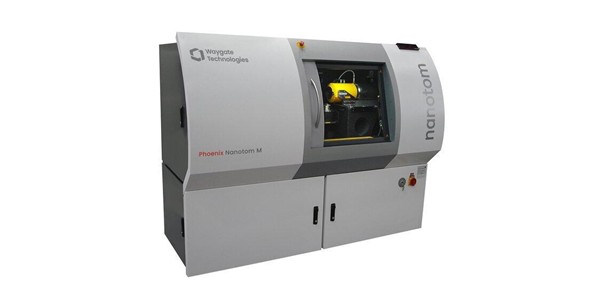
As industries evolve toward higher precision, faster production cycles, and increasingly complex components, advanced metrology tools have become essential. One of the most powerful technologies available today is nano-scale computed tomography, which allows engineers and quality teams to visualize, measure, and analyze internal and external features with exceptional accuracy.
Selecting the right nano-scale CT system involves much more than comparing technical specifications. It requires understanding your specific application, material requirements, inspection goals, and long-term operational needs.
This article explains the key factors that industrial professionals should consider when choosing the right nano CT system for metrology applications.
What nano CT Technology Offers
Before investing in a system, it is crucial to understand what nano CT brings to industrial environments. Unlike conventional CT systems, nano-scale CT enables extremely small voxel sizes, often reaching the sub-micron range.
This level of detail allows companies to inspect microstructures, detect internal defects, and evaluate product integrity without destroying the sample. Applications include electronics, additive manufacturing, micro-molding, medical devices, fine mechanical components, and research-level material studies.
The technology provides high-resolution 3D imaging that can reveal cracks, voids, delamination, inclusions, and dimensional deviations that traditional inspection methods might miss. By knowing what this technology can achieve, you can better determine whether your products and processes will significantly benefit from adopting it.
Identifying Your Specific Application Requirements
Every industry and application has unique metrology needs. Before choosing a nano-scale CT system, evaluate the type of components you intend to inspect. Consider factors such as part size, geometry complexity, material composition, and the level of detail required. Some systems excel at imaging small polymer structures, while others are optimized for dense metals or multi-material assemblies.
Also evaluate whether the system will be used primarily for defect detection, dimensional measurement, R&D, process optimization, or all of these. The clearer your objectives, the easier it becomes to choose a system with the resolution, energy levels, and detector capabilities that match your operational goals.
Assessing Resolution, Accuracy, and Measurement Capabilities
Resolution and accuracy are critical metrics in any metrology tool. Nano-scale CT systems vary widely in their achievable voxel sizes, geometric magnification, and metrological precision.
When evaluating options, do not focus solely on the system’s maximum resolution; instead, determine whether it can sustain high accuracy under the real conditions in which you will operate it. Factors such as system stability, mechanical precision, X-ray spot size, and detector quality play major roles in measurement repeatability.
Additionally, consider the availability of advanced reconstruction algorithms and correction tools that enhance accuracy. Choosing a system with the right balance of measurement performance ensures reliable inspections and reduces the risk of false interpretations.
Considering Sample Size and Material Compatibility
A common challenge when selecting a nano-scale CT system is balancing resolution with sample size capacity. Higher magnification typically requires smaller samples, so it is important to determine the maximum part dimensions you will need to analyze.
If your industrial processes involve a variety of component sizes, opt for a flexible system that can adjust magnification levels without compromising image quality. Material compatibility is another crucial aspect.
Dense materials such as metals require higher energy levels, while delicate materials may need lower power settings to avoid overheating or damage. Choosing a system tailored to the materials used in your industry ensures optimal imaging results and extends the longevity of your equipment.
Evaluating Software, Automation, and User Experience
Modern nano-scale CT systems rely heavily on software for reconstruction, visualization, and measurement. A powerful software suite can drastically improve workflow efficiency. Look for features such as automated scanning routines, adaptive exposure settings, intuitive 3D visualization tools, and advanced metrology modules that support GD&T analysis, porosity mapping, and defect quantification.
Automation features are especially valuable for high-volume inspections or repetitive quality-control tasks. Additionally, consider the user interface and learning curve. Systems that provide guided workflows, digital assistants, or integrated analytics can significantly reduce training time and improve productivity across your inspection team.
Factoring in Maintenance, Support, and Total Cost of Ownership
Investing in a nano-scale CT system is a long-term decision, so it is essential to understand the ongoing costs and support requirements. Evaluate the durability of system components, availability of technical support, and the provider’s track record in industrial environments.
Preventive maintenance schedules, spare part accessibility, and system calibration services all influence the total cost of ownership. Additionally, consider how easily the system can be upgraded in the future. As inspection needs evolve, having an expandable platform ensures that your investment continues to add value over many years. A reliable support network helps minimize downtime and ensures consistent performance over the system’s operational lifespan.
Final Thoughts
Choosing the right nano CT system for industrial metrology requires a clear understanding of your application demands, material characteristics, desired resolution, and long-term operational needs. By evaluating software capability, sample compatibility, maintenance requirements, and overall measurement performance, you can select a solution that delivers dependable results and supports continuous improvement in your inspection processes. When chosen wisely, a nano CT system becomes a powerful asset that enhances product quality, boosts efficiency, and provides actionable insights across your entire production workflow.