Elham Kashefi: A Global Architect of Secure and Verifiable Quantum Computing
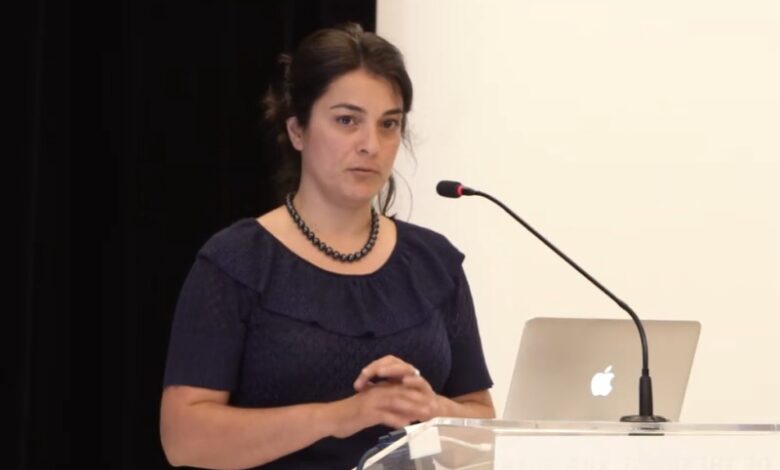
Elham Kashefi stands among the most influential figures shaping the modern quantum computing landscape. Her career bridges deep theoretical foundations and real-world industrial delivery, helping move quantum technologies from abstract models into trustworthy, deployable systems. With senior leadership roles across the United Kingdom and France, and a research portfolio that has defined entire subfields, she has become a central voice in secure, verifiable, and responsible quantum innovation.
Elham Kashefi and the Foundations of Quantum Computing
Early Academic Formation
Born and educated initially in Iran, Elham Kashefi developed a strong mathematical grounding at Sharif University of Technology, completing her master’s degree in applied mathematics. This rigorous background shaped her analytical approach to computation and complexity, preparing her for the emerging challenges of quantum theory.
She later pursued doctoral studies at Imperial College London, earning a PhD in quantum computing. Under the supervision of Vlatko Vedral and Steffen van Bakel, she explored models of quantum computation at a time when the discipline itself was still forming. This period laid the intellectual foundations for her later breakthroughs in secure and verifiable quantum systems.
Postdoctoral Research and Oxford Years
Following her doctorate, she held research positions at leading institutions, including a Junior Research Fellowship at Christ Church College, University of Oxford, and a postdoctoral fellowship at the Institute for Quantum Computing. These roles allowed her to deepen her work on quantum algorithms, complexity theory, and computational models, while building international collaborations that continue to shape the field.
Elham Kashefi and Blind Quantum Computing
Inventing a New Paradigm
One of Elham Kashefi’s most widely recognised achievements is her role as a co-inventor of blind quantum computing. This concept enables a client to delegate a quantum computation to a powerful remote quantum computer without revealing the input data, the algorithm, or the output. In an era where quantum hardware is expensive and often accessed via the cloud, this idea has become foundational.
Blind quantum computing transformed how researchers think about privacy and trust in quantum systems. It demonstrated that security could be built directly into the fabric of quantum protocols, rather than added as an afterthought.
From Theory to Trust
Beyond privacy, her work addressed a deeper question: how can users verify that a quantum computation has been carried out correctly? This led to her co-founding the field of quantum verification, providing methods for certifying the correctness of quantum computations even when the hardware itself is not fully trusted.
Academic Leadership at the University of Edinburgh
Personal Chair in Quantum Computing
Elham Kashefi holds a Personal Chair in Quantum Computing at the School of Informatics, University of Edinburgh, where she has been a permanent member of staff since 2008. In this role, she has built a research programme that integrates software, theory, and applications across diverse quantum hardware platforms.
Her work at Edinburgh spans simulation, modelling, and verification, enabling quantum computing to be applied with confidence to areas such as machine learning and cryptanalysis. She is also known for mentoring early-career researchers and doctoral students, helping to shape the next generation of quantum scientists.
Quantum Software and Applications
A defining feature of her academic approach is the emphasis on software as the bridge between theory and hardware. By focusing on software layers that can operate across multiple quantum platforms, her research delivers results that remain relevant despite rapid hardware evolution.
Elham Kashefi in France: CNRS and Sorbonne Université
Director of Research at CNRS
In addition to her UK appointment, Elham Kashefi France activities are anchored through her role as Directrice de recherche at the Centre national de la recherche scientifique (CNRS), based at Sorbonne Université in Paris. She has held this senior research position since 2007, reflecting long-standing engagement with the French scientific community.
Strengthening European Quantum Research
Her presence in France has helped strengthen collaboration between UK and European quantum initiatives. Working within the CNRS system, she contributes to large-scale research programmes, international networks, and interdisciplinary projects that connect physics, computer science, and cryptography.
National Quantum Computing Centre and UK Leadership
Chief Scientist at NQCC
In 2023, Elham Kashefi was appointed Chief Scientist at the National Quantum Computing Centre (NQCC) in Oxfordshire. In this role, she provides academic leadership for the UK’s national quantum programme, helping align cutting-edge research with industrial and societal needs.
Her responsibilities include shaping research strategy, guiding application development, and ensuring that quantum technologies are deployed responsibly and securely.
Building a National Ecosystem
Through the NQCC, she works closely with industry, government, and academia to accelerate the transition from laboratory research to usable quantum solutions. Her emphasis on verification and trust has become particularly important as quantum computing moves closer to commercial reality.
Entrepreneurship and VeriQloud
From Research to Enterprise
Elham Kashefi is also a co-founder of VeriQloud, a company focused on secure quantum networks and quantum cloud services. VeriQloud translates academic research into practical tools for industry, addressing real-world concerns around security, privacy, and verification.
Impact on Quantum Networks
The company’s work reflects her broader vision: quantum technologies should be powerful, but also trustworthy and accessible. By embedding verification into networked quantum systems, VeriQloud contributes to the long-term viability of quantum communication infrastructures.
Community Leadership and Service
Global Engagement
Beyond her formal roles, Elham Kashefi is a prominent community leader. She has served on steering committees for major international conferences, including those focused on quantum information processing and quantum computation theory. She is also deeply involved in the Quantum Software Lab and UK quantum hubs.
Commitment to EDI and Responsible Innovation
A consistent theme throughout her career is commitment to equality, diversity, and inclusion. She actively promotes talent development and responsible innovation, ensuring that the growth of quantum technologies benefits society as a whole.
Recognition and Academic Impact
Awards and Fellowships
Her contributions have been recognised through prestigious honours, including EPSRC Advanced and Established Career Fellowships, the French Margaret Intrapreneur Award in 2021, and election as a Fellow of the Royal Society of Edinburgh in 2024.
Research Influence
With an h-index of around 42, her research has been widely cited across quantum computing, cryptography, and theoretical computer science. Her publications continue to influence both foundational theory and applied quantum research.
Conclusion
Elham Kashefi’s career exemplifies how deep theoretical insight can drive practical, trustworthy technological progress. Through pioneering work in blind quantum computing and verification, leadership roles in the UK and France, and a commitment to responsible innovation, she has helped define what secure quantum computing looks like today.
As quantum technologies move ever closer to widespread deployment, her influence on how they are designed, verified, and governed will remain central to the field’s future.