Ed Campbell: The Rise of a Scottish Journalist Redefining Political Storytelling in Britain
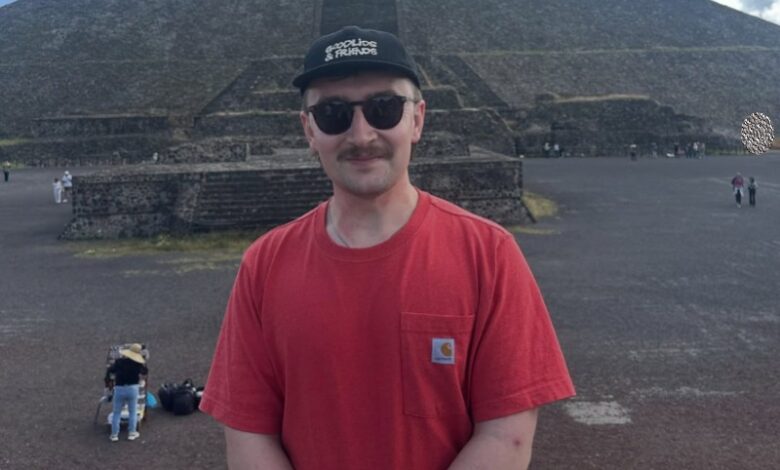
Ed Campbell has emerged as one of the most distinctive young voices in British media. A Scottish journalist and presenter based in London, he has built a reputation for making sharp, social-first documentaries that bring politics, subcultures and overlooked communities to wider audiences. His work stands out because it does not merely chase headlines. Instead, it gives people space to speak for themselves, often in worlds that are contentious, misunderstood or simply ignored by mainstream coverage.
In an era when attention spans are short and trust in media is fragile, his style feels particularly relevant. He combines the pace and accessibility of digital platforms with the depth and curiosity of long-form reporting. That mix has helped him achieve millions of views across platforms and build an identity that sits comfortably between traditional journalism and creator-led media.
What makes his profile especially interesting is the breadth of his work. He has reported on politics, culture and fringe communities, written for major publications, appeared on national broadcast outlets and developed a recognisable voice online. At the same time, he has shown a willingness to move between serious documentary work and lighter, comedic cultural writing, which gives his public persona a flexibility many journalists struggle to achieve.
Ed Campbell’s background and education
Ed Campbell’s academic path suggests a strong grounding in politics, media and public discourse. He attended Hutchesons’ Grammar School, where he completed his primary and secondary education between 2001 and 2014. His school results were notably strong, including Highers at AAAAAA and Advanced Highers at AAB, pointing to academic consistency from an early stage.
Ed Campbell studied politics before specialising in journalism
After school, he went to the University of Edinburgh, where he studied Politics with Quantitative Methods from 2014 to 2018, graduating with a 2:1. His dissertation focused on Donald Trump, right-wing populism and social media, which is revealing in itself. Even at university level, he was already looking closely at the relationship between politics, language and digital communication, themes that would later define much of his professional work.
During that period, he also spent time at the University of North Carolina at Chapel Hill between 2016 and 2017, studying Political Science. His activities there included UNC Men’s Rugby and Chapel Hill Players, suggesting a balance of academic, sporting and creative interests.
He later went on to City, University of London, where he completed a Master of Arts in Broadcast Journalism from 2019 to 2020, graduating with Merit. He also received an individual commendation for his work on an assessed TV newsday as social producer. That recognition hints at an early aptitude not just for journalism, but for the social and digital presentation of news.
Ed Campbell’s career journey from newsroom roles to independent journalism
His professional development has been rapid and varied. Early in his career, he worked as a freelance Social Media Editor at The Telegraph in London between August and September 2020. Soon afterwards, he joined Politics.co.uk as a Video Journalist from September 2020 to March 2021.
These roles appear to have helped him refine two core strengths: reporting and platform-native storytelling. Rather than treating video as an add-on, he seems to have understood early that digital journalism increasingly depends on how stories are framed, edited and distributed for audiences who consume news on social feeds as much as on traditional outlets.
Ed Campbell’s PoliticsJOE years shaped his public profile
A major turning point came when he joined JOE Media Group in March 2021. Over four and a half years, he rose through a series of increasingly senior editorial roles, including Politics Videographer, Politics Producer, Senior Producer and Special Correspondent.
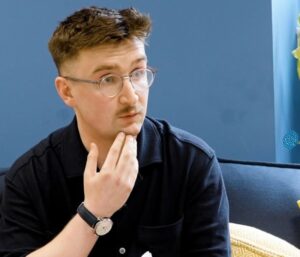
This period was central to his rise. At PoliticsJOE, he presented, edited, produced, wrote and filmed political content that achieved millions of views. His documentary subjects ranged from far-right rallies to highly unusual institutions such as a university for porn stars. That range shows both editorial courage and an instinct for stories that are visually strong, socially relevant and capable of attracting large audiences.
His own summary of that time is especially telling. He reported from refugee camps and riots, interviewed everyone from award-winning porn stars to first ministers, and helped create content that resonated widely across social platforms. He also noted that he was responsible for the ten most-viewed pieces of original journalism on the PoliticsJOE channel published since he joined, which underlines the scale of his impact.
Ed Campbell also became a recognisable podcast and media voice
Beyond video, he was also a host and co-host on the PoliticsJOE podcast and Pubcast, helping build a forum with a dedicated audience and significant reach. He described the podcast as the third biggest news podcast in the UK, which reflects his ability to contribute not only to visual journalism but to conversational political media as well.
His public profile extended beyond his own channels. He appeared on BBC Newsnight, LBC, Radio 4 and even The Chase, giving him broader visibility than many digital-first reporters. This matters because it shows he is not confined to internet fame. He has crossed into established broadcast and public platforms while keeping a distinctly modern voice.
Ed Campbell and his move into freelance work
In August 2025, he moved into freelance and independent journalism. This transition was not framed as a retreat from mainstream media, but as an opportunity. He made clear that he saw real potential for journalist-creators to make ambitious, exciting content on their own terms.
That shift fits the wider media landscape. More journalists are trying to build direct relationships with audiences rather than relying entirely on institutions. In his case, the move appears credible because he already had the skills to work independently. He could report, present, shoot, edit, write, consult and lecture, which makes him unusually self-sufficient.
Ed Campbell’s freelance and consulting roles
Since going independent, he has worked as a Social Video Consultant for freelance clients including the Observer, The Nerve and The Booking Club podcast. He also took on a part-time role in Social Video Strategy at The i Paper from October 2025, working with the video team to optimise content.
Alongside this, he served as a Visiting Lecturer at City, University of London from November 2024 to August 2025. That teaching role reinforces the idea that he is not simply a performer in front of the camera. He is also someone with enough craft knowledge and industry insight to teach the next generation of journalists.
Ed Campbell’s writing, style and public identity
One of the most compelling parts of his profile is the way he balances serious reporting with wit. He specialises in social-first documentary storytelling that centres people, subcultures and politics, but he has also written comedic articles about pop culture topics such as The Traitors and Vogue’s boyfriend article.
That tonal flexibility is rare. Many journalists are either very formal or relentlessly ironic. He appears comfortable doing both, which likely explains why his work resonates across multiple audiences. He can produce hard-edged documentaries on politically charged subjects while also leaning into humour, self-awareness and internet culture.
Ed Campbell’s publications and online presence
He has written for the Guardian, the New Statesman and Dispatch, and his online bios present him as a journalist who makes content your ex-boyfriend would like. That line is clever branding. It is funny, memorable and intentionally informal, but it also signals a clear audience and cultural sensibility.
His Instagram account presents him as a digital creator and journalist with thousands of followers, while his X profile shows a larger following and reinforces the same voice. Across platforms, his branding is consistent: politically literate, culturally online, slightly mischievous and very aware of how modern audiences engage with media.
Ed Campbell is now building new projects
At present, he is working on England Weekend Television, an independent YouTube documentary channel, and developing podcast projects. That suggests his future may lie in building a media identity that is platform-agnostic. Rather than fitting into one title or organisation, he is shaping a career that moves between journalism, presenting, consultancy, teaching and creative production.
Why Ed Campbell matters in today’s media landscape
His career tells a bigger story about where journalism is heading. Audiences increasingly respond to reporters who can combine credibility with personality, and substance with accessibility. He seems to understand that journalism does not have to lose its seriousness in order to reach large audiences online. In fact, his work suggests the opposite: serious stories can travel further when they are told with clarity, confidence and platform awareness.
He also represents a shift in how journalists build careers. Instead of following a purely institutional path, he has built a portfolio career across reporting, hosting, writing, consultancy and lecturing. That makes him more resilient and arguably more influential than someone working in only one format.
Final thoughts
Ed Campbell is not simply another political reporter with a social media presence. He is part of a new wave of British journalists who understand both storytelling and distribution. His background in politics, his training in broadcast journalism, his success at PoliticsJOE and his confident move into freelance work all point to someone who has built a strong foundation for long-term relevance.
Whether through documentaries, podcasts, commentary or cultural essays, he has shown an ability to connect with audiences without flattening complex subjects. That is a valuable skill in any era, but especially in one shaped by digital noise and fleeting attention. As he develops independent projects and expands his creative range, his career will remain one to watch closely.