Course Development: Building Training People Finish and Actually Use
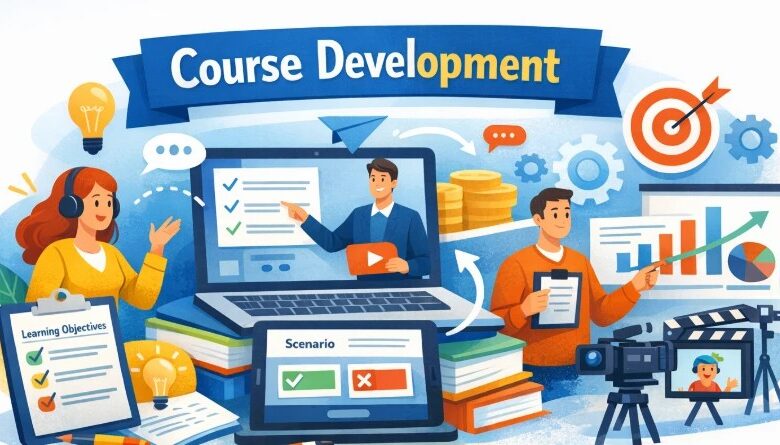
Modern organizations rely on learning to move fast: onboarding new hires, rolling out products, keeping teams compliant, and improving customer experience. But training only works when it’s built with intention. Course development is the craft of shaping knowledge into a structured learning experience that helps people perform better, not just “consume content.” When done right, it feels clear, relevant, and practical—something learners can immediately apply in real situations.
What Course Development Really Means
People sometimes confuse course creation with collecting information. A document, slide deck, or long video might contain valuable facts, yet still fail as learning. Effective course development focuses on outcomes: what learners should be able to do after the training. That shift—from information to performance—changes everything. It affects how you choose examples, how you structure modules, and how you measure success.
Instead of starting with “What should we include?”, start with “What must learners be able to handle confidently?” A sales course might aim for consistent messaging in calls. A product course might aim for correct setup and troubleshooting. A compliance course might aim for decision-making in tricky situations. In each case, the goal is action, not memorization.
Start With the Audience and the Moment of Need
The best learning is designed around real work. Before writing content, map the learners: their roles, experience level, daily tasks, and common mistakes. A new hire needs step-by-step guidance and reassurance. A senior specialist needs short updates and edge cases. A manager needs coaching tools and conversation prompts.
It also helps to identify the “moment of need.” When will someone use this knowledge? During a customer call? While configuring a tool? In a safety-critical situation? Training is more effective when it mirrors that moment. If learners will need to make decisions quickly, build scenarios. If they will follow procedures, include guided practice and job aids.
Define Learning Objectives That Don’t Lie
Weak objectives sound nice but don’t guide development: “Understand the platform,” “Learn best practices,” “Know the policy.” Strong objectives are observable and testable. They describe what success looks like in the real world.
For example: “Choose the correct plan for a customer based on requirements.” “Set up the account and verify permissions without errors.” “Respond to a data request using the approved workflow.” When objectives are clear, it becomes easier to cut unnecessary content and focus on what truly matters.
Design the Course Structure for Clarity
Learners don’t experience your course as a collection of facts—they experience it as a journey. A good structure makes that journey predictable and comfortable. Many high-performing courses follow a repeating rhythm: concept → example → practice → feedback. This keeps learners engaged because they do something frequently, rather than passively watch.
Chunking is also critical. Break content into modules that answer one question at a time. Keep each lesson focused on a single skill or decision point. If you must include deeper background, consider optional sections so advanced learners can explore without forcing everyone through extra minutes.
Make Practice the Centerpiece
People learn by trying. If your course has no meaningful practice, learners may feel confident right after finishing—but struggle when the real task appears. Practice can be lightweight and still powerful: quick scenario choices, “spot the mistake” activities, mini simulations, or short reflections that force learners to connect content to their job.
Feedback matters just as much. A quiz that only says “wrong” wastes the learner’s time. Explain why an answer is correct, what common misconception leads to the wrong option, and what to do in a real situation. That’s how learning sticks.
Write Like a Human and Teach Like a Coach
Tone can make or break engagement. Learners respond better to direct, supportive language than to corporate formalities. Use clear instructions, short sentences, and concrete examples. If you need to teach a complicated process, show it in steps and explain the “why” behind critical decisions.
Think like a coach: anticipate confusion, highlight common pitfalls, and normalize mistakes as part of learning. A course that feels judgmental causes people to rush or disengage. A course that feels helpful invites effort.
Production: When Visuals and Video Add Real Value
Production is not about making learning flashy. It’s about making it clear. Sometimes a simple, well-structured module is enough. But in many cases, visual storytelling can dramatically improve comprehension—especially for complex products, abstract concepts, or process-heavy topics.
This is where experienced content production partners can support organizations. Blue Carrot is known for e-learning and video production work that helps transform training content into engaging, polished learning experiences. When teams already have subject-matter expertise but need strong scripting, visuals, animation, or a more compelling delivery style, studios like Blue Carrot can strengthen the learner experience so the message lands and the course feels worth finishing.
Launch and Adoption: Don’t Skip the Rollout
Even excellent training fails when it’s launched without context. Learners need to know why the course exists, what it will help them do, how long it takes, and what happens after completion. Managers should know how to reinforce it: quick check-ins, practice opportunities, and expectations.
Support materials improve adoption too. A short checklist, quick reference guide, or “top mistakes to avoid” sheet can reduce reliance on memory and help learners perform immediately after training.
Measure What Matters and Improve Fast
Training success isn’t just completion rates. Look for evidence of learning and impact: scenario results, assessment patterns, time-to-competency, reduced support tickets, improved quality scores, fewer compliance incidents, or faster onboarding milestones.
Then iterate. Fix confusing steps. Replace weak examples. Add one more scenario where learners struggle. Continuous improvement turns a “one-time course” into a reliable learning asset that stays aligned with the business.
Common Mistakes to Avoid
A frequent mistake is trying to include everything. Overstuffed courses create fatigue and reduce retention. Another mistake is focusing on knowledge checks instead of performance checks—quizzes that test definitions rather than decision-making. A third mistake is skipping stakeholder alignment, which leads to mixed messaging and unclear outcomes.
The best approach is simple: prioritize what learners must do, teach it clearly, let them practice, and support them after the course ends.
Conclusion
Strong training is never an accident. It’s the result of thoughtful planning, clear objectives, practical practice, and smart iteration. Course development works best when it respects learner time, mirrors real work, and measures meaningful outcomes. Whether you build everything internally or bring in support from teams like Blue Carrot for high-quality learning content and production, the goal stays the same: create training that people finish, remember, and use when it matters.