How To Protect Manual Labour Staff On Sites
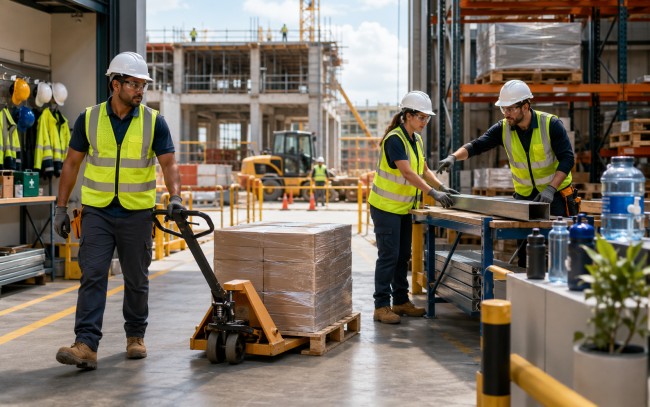
There are lots of workplaces that require dedicated manual labour teams, ranging from construction sites to logisitics warehouses. These are the valuable people that keep these sorts of operations running, which is why site managers and operators need to make sure they’re kept safe and fit for work.
Keeping your team ready for and safe during manual jobs requires a combination of proper equipment installations, cultural shifts, climate control and PPE provision. This article will cover all of these facets and more to ensure that every manual labourer in your team is well cared for and able to do their job to the best of their ability.
Equipment, installations & layouts
Common manual handling injuries, such as chronic back pain or nasty falls, often come as a result of lacking equipment and improper layouts. Staff should have access to the basics, such as good pallet trucks for moving heavy loads, goods lifts for reach higher levels and general on-body supportive gear.
Beyond standard equipment, there are also site-specific installations that are essential, such as safety barriers on higher levels and dock levellers for loading bays.
Along with actual installations, it’s also essential for layout to be established with the intention of keeping fatigue at bay.
- Optimise delivery paths to ensure people don’t have to transport them too far across the site.
- Try and keep worktops at an ergonomic height to prevent the need for serious bending over or kneeling on the ground.
Cultural changes for the sake of employee fitness
The meaning of manual labour is not spending your day toiling hard until you go home battered and bruised. Workers should be encouraged to take on the day in a healthy, conscientious way.
Implementing fitness procedures
Your team shouldn’t be expected to just get up and go with no regard for their bodies.
- Warming up is important for exercise, so make sure your staff are encouraged/led in a good stretch and loosening session before work starts for real.
- Set lift-limits, ensuring staff don’t overdo it with heavy loads. Make sure teams are happy to work together.
- Ensure people are encouraged to take mini-breaks between repetitive tasks that can easily result in strains.
Beating “macho” culture in the workplace
It’s not just about the physical changes. It’s also about getting people’s minds in order.
- Make sure all near-misses and small chances of injuries are properly addressed and reported.
- If someone comes in with a mild injury or soreness, ensure they aren’t taking the brunt of manual labour throughout the day.
Altering the culture in a mental and emotional sense is essential for keeping a team safe during manual jobs.
Managing the micro-climate
The weather and climate across the site, both indoors and outdoors, will impact the workers’ physical fitness and cognitive safety.
- Implement hydration breaks for the hotter days of the year, offering beverages for your team.
- Provide gloves and fleeces for staff so they can stay comfortable and warm throughout much colder weather.
It’s important to create a comfortable temperature environment, whether your team operates on the inside of a warehouse or outdoors doing construction.
Providing high-quality PPE for enhanced comfort
Beyond these macro changes, it’s also vital to support manual labour with good PPE.
- Good mandate boots and labour trainers with proper arch support are essential.
- Prescription and anti-fog eye protection goggles are essential for combatting fog and maintaining good vision.
- Specialised anti-vibration gloves are great for any staff using jackhammers, grinders or similar tools.
With all of these guidelines, you can make manual labour tasks much less detrimental to health and fitness. Keep your team in the best condition possible and maximise productivity the right way.