Custom Ceramic Bowl Wholesale Guide 2026
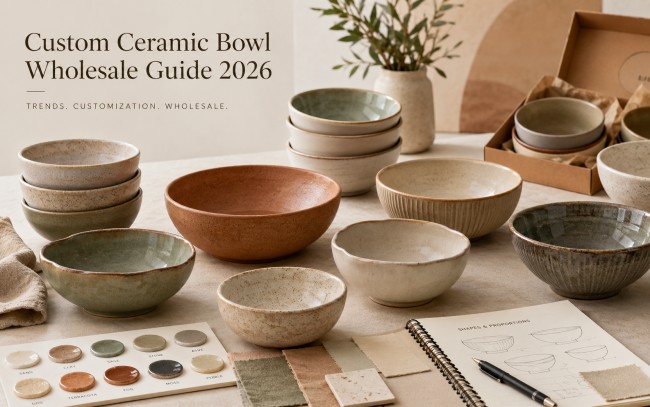
If you run a homeware store, a restaurant supplier, or an online retailer of kitchenware, you will have seen the rise in demand for ceramic tableware in the past few years. Now ceramic bowls aren’t just practical; they’re also a statement of design. That is why numerous retailers and hospitality brands are considering ceramic bowl wholesale suppliers to ensure that they get ceramic bowls that seem handmade, appear premium, and fit into a reasonable budget. This guide will take you through the process of finding the best wholesale ceramic bowl manufacturer and various other aspects, including pricing, minimum order quantities, and design customization.
Why Ceramic Bowls Are Still a Smart Business Bet in 2026
While ceramic doesn’t have a definite expiration date, 2026 has sparked a renewed interest with some changes in consumer habits. People are preparing meals at home more often, hosting unstructured meals and paying extra attention to how their kitchen items appear when they post photos online. The ceramic bowls have it all: they are sturdy, most are microwave and dishwasher safe, and they look great in photos because of the variety of glaze and texture.
This translates to regular sales in all product categories for retailers, such as cereal bowls, serving bowls, ramen bowls, pasta bowls, and accent bowls. In addition, wholesale ceramic demand has surged further with the growth of custom brand tableware from restaurants and cafes, which are seeking a dining experience all their own.
Understanding the Wholesale Buying Process
When purchasing ceramic bowls wholesale, it is not the same as buying a few bowls off a retail shelf. Most manufacturers have minimum order quantities (MOQs), and prices are often significantly dependent on the design complexity, the glaze finish, and the order volume.
In general, the following can be expected:
Standard MOQs usually range from a few hundred to a few thousand units per design, depending on the factory. Smaller boutique manufacturers may offer lower MOQs for a higher per-unit cost, while larger factories can offer better pricing at higher volumes.
Lead times for custom ceramic pieces typically run anywhere from four to ten weeks, factoring in mold creation (if it’s a new shape), glazing, firing, and quality control. If you’re working with a stock design and only need custom branding or color, turnaround is usually faster.
Shipping and logistics matter more than people expect. Ceramic is heavy and fragile, so freight costs and packaging quality can significantly affect your total landed cost. Always ask suppliers about their packaging methods and whether they’ve had breakage issues in past shipments.
What Makes a Good Ceramic Bowl Manufacturer
Not all wholesale suppliers are the same, and not all of them are going to be the same for you as soon as you place an order, but rather months later. Here are a couple of things to watch for when shopping around for manufacturers.
Before placing a bulk order, inquire if they provide any samples. A good supplier will have no qualms about sending a few samples for you to examine and check the quality of glaze, weight, and consistency of finish.
Secondly, see how they tailor their services to you. Are they able to match a certain Pantone colour for your glaze? Is it possible to add embossed logos, custom rims or unique textures? The more willing a manufacturer is to let the design evolve, the more likely it is that a line of products will be developed that is truly unique and not something that anyone else could duplicate.\
Third, inquire about certifications. If the bowls are to be used for eating or serving food, they cannot be made with food-safe glazes or be finished with lead. Trusted suppliers will be happy to provide documentation of testing.
Design Trends Shaping Ceramic Bowls in 2026
When purchasing bowls for retail or public service, it’s useful to know what is really in demand at this moment. This year, there are a couple of trends that stand out:
- Earthy, matte glazes in warm neutrals like sand, clay, and sage continue to outperform glossy finishes, especially for home decor buyers who want a natural, organic look.
- Irregular, hand-thrown shapes are popular even in mass-produced lines, since consumers associate slight asymmetry with authenticity and craftsmanship.
- Stackable and nested bowl sets are gaining traction for smaller kitchens and for retailers who want to offer better perceived value through bundling.
- Two-tone and reactive glazes where the color shifts slightly across the surface are increasingly requested for higher-end product lines.
Those customers that make use of these designs in their custom orders often exhibit higher sell-throughs than customers opting for single colour designs.
Tips for First-Time Wholesale Buyers
When you’re ordering ceramic bowls wholesale for the first time, there are some tips that will save you some time and money.
Even if the unit price is a bit higher, begin with a trial order, whatever the supplier will allow. This allows you to evaluate the quality and response to the market on a small scale before you invest in a big batch.
When ordering products outside the country, especially in bulk, be sure to ask for an audit from a factory or a third-party inspection. This provides an extra safeguard in ensuring uniformity of quality in a production run.
Have a good negotiation on payment terms. There are many manufacturers that require a deposit first, and the rest of the payment is due prior to shipping. A good supplier will be willing to negotiate terms after some history of business is established.
Last but not least, consider packaging in the early stages. Having your boxes custom-made or made from eco-friendly material can boost your brand image, and it’s simpler to organize this during your bowl ordering process than after the fact.
Final Thoughts
The key to custom ceramic bowls wholesale 2026 is to find a manufacturer that offers quality, flexibility, and fair pricing. The category is expanding, trends are becoming more authentic than uniform, and consumers who do their homework in selecting their suppliers generally develop more unique and stronger product lines. From a small home goods shop to a large restaurant network, a careful sourcing plan for your wholesale products will be rewarded in the quality of your products and your customer service.