The Lifecycle of a Reusable Tote Bag
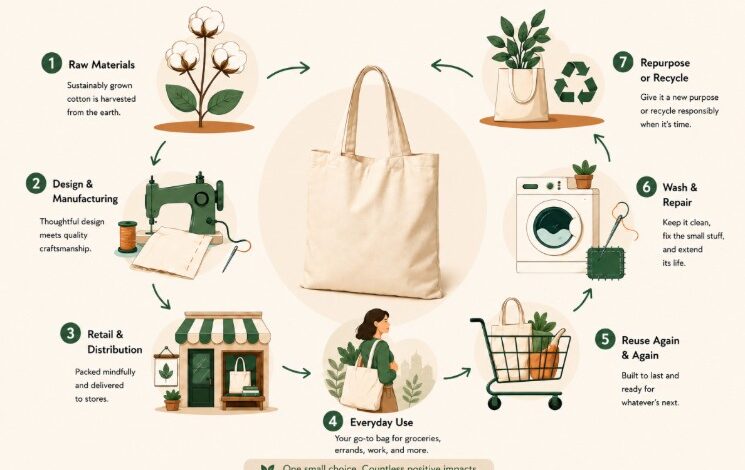
A reusable tote bag may look simple, but it goes through a full lifecycle before and after it reaches the customer. Understanding this lifecycle helps consumers and businesses make smarter decisions about materials, quality, and reuse.
The value of reusable tote bags depends not only on what they are made from, but also on how often they are used.
Stage 1: Material Selection
Common Tote Bag Materials
Reusable totes can be made from several materials, including:
- Cotton
- Canvas
- Jute
- Recycled polyester
- Non-woven fabric
- Organic cotton
Each material has different strengths. Canvas is durable, cotton is lightweight, jute has a natural look, and recycled fabrics can reduce demand for new raw materials.
Why Material Matters
The better the material, the longer the bag can last. A durable bag that is reused for years usually offers more value than a low-quality bag that breaks quickly.
Stage 2: Manufacturing
Cutting, Stitching, and Printing
After material selection, the fabric is cut, stitched, and printed. Important quality details include:
- Reinforced handles
- Strong seams
- Good fabric weight
- Secure stitching
- Washable printing
A well-made, eco-friendly tote bag should be strong enough for repeated use.
Stage 3: Distribution and Use
The Most Important Stage Is Reuse
The environmental and practical value of a tote bag increases with each use. A tote can be used for:
- Grocery shopping
- Work items
- Books
- Gym clothes
- Travel essentials
- Storage
- Farmers market visits
The more often it is used, the more useful it becomes.
Stage 4: End of Life
Reuse Before Disposal
Even when a tote becomes worn, it can often be repurposed. It may become a storage bag, laundry bag, craft supply holder, or car organizer.
Some materials may also be recyclable, depending on local recycling systems.
Conclusion
The lifecycle of a reusable tote bag shows that quality and repeated use matter most. A durable tote is not just a bag — it is a long-term everyday tool.