Exploring the Canary Islands: A Cruise Destination Like No Other
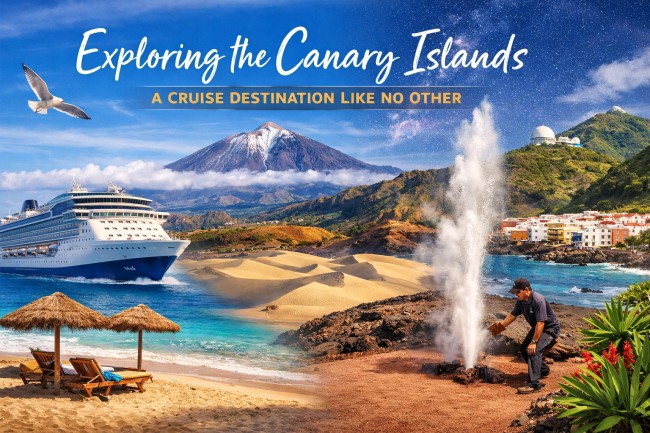
If you’ve ever found yourself wondering where to head on your next cruise, the Canary Islands are well worth serious consideration. Sitting just off the north-western coast of Africa, this Spanish archipelago has a lot going for it. Reliably warm weather, landscapes that genuinely surprise you, and a relaxed, friendly atmosphere – it’s the kind of place that tends to win people over pretty quickly, whether they’re seasoned cruisers or setting sail for the first time.
What makes a cruise to the Canary Islands particularly appealing is that you’re not just visiting one place. You get a whole collection of islands, each with its own personality. Volcanic terrain, dense laurel forests, sweeping beaches – they can feel worlds apart from one another, even though they’re part of the same archipelago. This post takes a look at what each major island has to offer, and why the Canaries make such a compelling destination.
Tenerife: A Diverse Island with Stunning Scenery
Tenerife is the largest of the Canary Islands and tends to be the first port of call on most itineraries – and for good reason. It’s a place of real contrasts, where rugged mountain scenery sits alongside colourful coastal towns and proper sandy beaches.
The big draw for many visitors is Mount Teide, Spain’s highest peak. You can hike up if you’re that way inclined, or take the cable car if you’d rather save your legs. Either way, the views are extraordinary, and the surrounding Teide National Park has this otherworldly, almost lunar quality to it that’s genuinely unlike anywhere else.
Down at sea level, there’s plenty to enjoy too. Playa de las Américas draws the crowds with its golden sands, whilst Playa Jardín offers a more unusual experience with its black volcanic beach. The capital, Santa Cruz, is worth a wander – there’s decent shopping, some lovely parks, and architecture that reflects the island’s layered history.
Gran Canaria: A Little Bit of Everything
Gran Canaria is another island that rewards exploration. It has a reputation for variety, and that reputation is well-earned. Head south and you’ll find the famous Maspalomas dunes, which are quite something – vast, shifting stretches of sand that feel more Saharan than Spanish. Travel inland and the landscape transforms completely into green, misty mountains dotted with quiet villages.
The southern beaches are popular for good reason: calm, clear water and reliable sunshine make them ideal for swimming or just sitting about doing very little. If you’d prefer something more active, the interior offers hiking trails and viewpoints with sweeping views across the island.
Las Palmas, the capital, has a character all of its own. Colonial architecture, interesting museums, good markets – it’s the sort of place you can spend a morning getting happily lost in, ducking into local shops and stopping for coffee.
Lanzarote: Volcanic Wonders
Lanzarote looks like nowhere else. That’s not an exaggeration. The volcanic landscape – black lava fields, stark craters, an almost complete absence of trees in places – gives the island a dramatic, unsettling beauty that takes a bit of getting used to but is ultimately rather magnificent.
Timanfaya National Park is the obvious highlight. You can explore it by bus or on foot, and the geothermal activity is genuinely impressive – staff at the park famously demonstrate the heat just beneath the surface by pouring water into the ground and watching it shoot back up as steam.
The island also has a strong artistic identity, largely thanks to the late César Manrique, a local artist and architect who left his mark all over Lanzarote. His influence on the island’s aesthetic is hard to overstate. The Jameos del Agua – caves converted into an art space and concert venue – is one of his most memorable projects and well worth a visit.
Beaches aren’t lacking either. Playa Blanca and Papagayo are both beautiful, and the year-round sunshine means there’s rarely a bad time to visit.
Fuerteventura: A Windsurfer’s Paradise
Fuerteventura is the island for those who like to be on or in the water. The trade winds that blow across the island pretty much constantly have made it one of Europe’s premier destinations for windsurfing and kite surfing, attracting serious athletes as well as enthusiastic beginners.
Away from the water sports scene, the island has a noticeably quieter, less developed feel than some of its neighbours. The landscapes are wide and open, the resorts a bit more low-key, and there are stretches of coastline that still feel genuinely unspoilt. Jandía Natural Park, in the south of the island, covers a rugged peninsula with protected habitats and some excellent walking.
The small villages scattered across the island are good for a gentle explore – on foot or by bike – and give a decent sense of what traditional Canarian life actually looks like away from the tourist strips. It’s a good island for decompressing.
La Palma: The Hidden Gem of the Canary Islands
La Palma doesn’t shout about itself, which might be partly why it’s managed to stay so lovely. Known locally as La Isla Bonita – the beautiful island – it’s greener and lusher than most of its neighbours, with ancient forests, dramatic volcanic peaks, and hiking trails that are seriously impressive.
It’s also become well-known among astronomers and stargazers. The skies above La Palma are some of the clearest in the world, which is why the Roque de los Muchachos Observatory is based there. On a clear night, the stars are genuinely breathtaking.
If what you’re after is a quieter, more contemplative sort of experience, La Palma fits the bill nicely. The small towns are unhurried, the pace of life is slow, and the natural scenery speaks for itself.
A Perfect Blend of Relaxation and Adventure
Part of what makes the Canary Islands such a satisfying cruise destination is that they really do offer something for most kinds of traveller. You can spend a day hiking up a volcano and the next one horizontal on a beach. You can explore colonial capitals or wander through lava fields. The variety is genuinely there, and it doesn’t feel forced.
The islands are also straightforward to get around and visit, which helps. There’s none of that frantic rushing that can make some cruise stops feel more stressful than enjoyable. The Canaries tend to feel relaxed, and that mood is contagious.
Conclusion
The Canary Islands earn their reputation as a cruise destination honestly. Each island is distinct enough that moving between them genuinely feels like a series of different experiences rather than more of the same. Lanzarote’s stark volcanic drama, La Palma’s green tranquillity, Fuerteventura’s windswept beaches – they sit comfortably alongside one another without any one island feeling redundant.
Whether you’re the sort of person who wants every day packed with activity or someone who mostly wants a sun lounger and a good book, there’s a corner of the Canaries that’ll suit you. It’s a part of the world that tends to leave people wanting to come back – and that, really, is the best endorsement there is.