Contract Manufacturing Services from THACO INDUSTRIES

In an increasingly competitive global environment, businesses are adopting contract manufacturing services as a strategic approach to reduce production costs, ensure consistent quality, and shorten product launch cycles. As a trusted manufacturing partner, THACO INDUSTRIES provides comprehensive solutions spanning product engineering, manufacturing operations , and rigorous quality control, enabling enterprises to focus on core competencies while achieving sustainable growth.
Understanding Contract Manufacturing in Modern Supply Chains
Contract manufacturing services refer to the outsourcing of component, assembly, or finished-product production to qualified third-party manufacturers operating under clearly defined technical specifications. These partners take responsibility for production execution, quality assurance, and delivery coordination while strictly complying with customer requirements and relevant industry standards.
Beyond basic outsourcing, contract manufacturing covers integrated services such as design optimization, material sourcing, process improvement, and supply chain coordination. Acting as an extension of their clients’ operations, contract manufacturers provide scalable production capacity. This approach eliminates the need for heavy capital investment in facilities, equipment, or specialized labor.
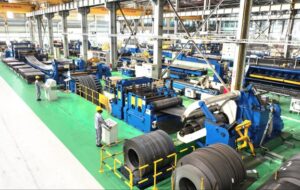
In modern global supply chains, contract manufacturing has become a strategic solution, particularly for companies serving regulated and highly competitive markets such as the EU. By partnering with manufacturers that combine technical expertise, scalable capacity, and regulatory compliance, organizations can strengthen supply reliability while maintaining cost efficiency.
These collaborations allow clients to focus internal resources on product development, brand management, and market expansion, while manufacturing partners handle production complexity, procurement, planning, quality control, and logistics execution. Throughout the partnership, clients retain ownership of intellectual property, technical specifications, and market strategies.
Key Operational Elements in Contract Manufacturing Projects
Successful contract manufacturing projects are built on structured workflows, clear governance, and close technical collaboration between clients and manufacturing partners. Engagements typically begin with joint design reviews, where engineering teams evaluate product drawings to improve manufacturability, optimize material usage, and control production costs. At this stage, Design for Manufacturing (DFM) principles are applied to ensure designs align with production capabilities, regulatory requirements, and target market standards.
Commercial agreements define production timelines, intellectual property protection, quality benchmarks, and compliance obligations for regulated markets such as the EU. These contractual frameworks create transparency and protect both parties throughout the project lifecycle.
Engineering and Technical Collaboration
Contract manufacturers function as an extension of their clients’ engineering teams. Services include prototype development, design validation, and process simulation to identify potential production risks early. Through value engineering, manufacturers propose alternative materials, optimized tolerances, and improved fabrication methods to enhance performance while maintaining cost efficiency.
Strategic Sourcing and Supply Chain Control
Effective contract manufacturing relies on robust sourcing strategies supported by a network of qualified supplier networks. Manufacturers conduct supplier audits, performance evaluations, and risk assessments to secure stable material supply. Maintaining multiple approved suppliers for critical components reduces dependency risks and strengthens price competitiveness. Long-term partnerships further enable continuous improvement and cost optimization.
Production Execution and Quality Management
Flexible production systems allow manufacturers to scale output in response to market demand. Automation, digital process control, and workforce planning ensure stable throughput and consistent quality.
Quality management is embedded across all stages, including:
- Incoming material inspection against technical specifications
- In-process monitoring during fabrication and assembly
- Final product validation in compliance with ISO 9001:2015 and industry-specific standards
- Statistical process control (SPC) to detect variations and drive continuous improvement
This structured quality approach minimizes defects, improves yield rates, and supports long-term product reliability.
Project Coordination and Data Transparency
Dedicated project management teams oversee scheduling, resource allocation, and cross-functional coordination. Digital reporting systems enable real-time tracking of production progress, quality metrics, and delivery milestones. Transparent data sharing and regular review meetings allow proactive issue resolution and alignment with product launch schedules.
Packaging, Logistics, and Lifecycle Support
Beyond production, contract manufacturers manage packaging design, branding integration, and export logistics. Packaging solutions are engineered to protect product integrity while balancing sustainability and cost efficiency. Logistics services cover warehousing, inventory control, order fulfillment, and transportation planning.
Post-production support enhances customer value through warranty management, repair services, spare parts supply, and aftermarket support. Ongoing technical assistance ensures product performance throughout its operational lifecycle.
Industry Applications of Contract Manufacturing Services
Contract manufacturing services support a wide range of industries, each with distinct technical, regulatory, and quality requirements.
Consumer Goods and Household Products
Manufacturing for consumer goods includes household appliances, personal care products, and accessories. Injection molding, assembly, and surface finishing processes deliver functional performance and visual appeal. Vietnam-based contract manufacturing offers competitive cost structures supported by expanding industrial capabilities.
Automotive and Industrial Components
Automotive manufacturing demands precision processes and strict adherence to standards such as IATF 16949:2016. Components include engine systems, chassis parts, electrical assemblies, and safety-critical modules.
Industrial parts manufacturing supports machinery and infrastructure applications, requiring advanced machining, fabrication, assembly, and CNC machining services. High traceability, comprehensive documentation, and rigorous quality controls are essential to ensure operational reliability.
Electronics, Medical, and Specialized Industries
Contract manufacturing services also serve highly regulated sectors:
- Electronics: PCB assembly, SMT processes, automated inspection, and functional testing
- Medical devices: Compliance with FDA, CE marking, and ISO 13485 standards
- Aerospace and defense: Advanced manufacturing capabilities, regulatory compliance, and security controls
- Renewable energy: Specialized materials and quality systems supporting sustainable technologies
Benefits of Partnering with Experienced Contract Manufacturers
Collaborating with established contract manufacturers delivers measurable business advantages, combining operational efficiency with risk reduction.
Cost Efficiency and Scalable Operations
Outsourcing production reduces capital expenditure on facilities, equipment, and workforce development. Companies gain flexibility to scale output in response to market demand while reallocating resources toward R&D, marketing, and expansion initiatives.
Access to Advanced Manufacturing Technologies
Contract manufacturers invest in automation, robotics, and Industry 4.0 technologies that individual companies may find difficult to justify independently. Access to advanced equipment, digital quality systems, and sustainable manufacturing practices enhances product innovation and competitiveness.
Quality Consistency and Regulatory Compliance
Maintaining certifications such as ISO 9001:2015, ISO 14001:2015, and IATF 16949:2016, along with market-specific requirements including CE marking and FDA registration, ensures consistent quality and regulatory compliance across global markets. Robust quality systems protect brand reputation and support long-term customer trust.
THACO INDUSTRIES: Advanced Contract Manufacturing Solutions
THACO INDUSTRIES, a sub-holding of THACO specializing in mechanical engineering and supporting industries, has developed a large-scale manufacturing complex in Vietnam. At Chu Lai (Da Nang city), the complex includes 18 specialized plants certified to ISO 9001:2015, ISO 14001:2015, and IATF 16949:2016.

Equipped with advanced machinery sourced from the US, Germany, Italy, and Japan, THACO INDUSTRIES delivers precision-engineered components for global OEMs. The corporation supplies body structures, chassis components, springs, wiring harnesses, plastic parts, automotive glass, and more to leading brands such as BMW, Peugeot, Hyundai, and Isuzu. Beyond automotive components, THACO INDUSTRIES also designs, manufactures, and supplies a diverse portfolio of industrial equipment, including lifting equipment, mining machinery, material handling systems, agricultural machinery, and consumer-use equipment.
Products are exported to Europe (Germany, Poland) as well as North America, Japan, South Korea, and Australia, demonstrating strong compliance with EU regulations and international quality standards.
In a global market where efficiency, quality, and speed are critical, partnering with a reliable provider of contract manufacturing services enables enterprises to strengthen competitiveness and accelerate growth. THACO INDUSTRIES stands ready to serve as a long-term manufacturing partner, delivering sustainable, compliant, and cost-effective solutions for global businesses.
Website: https://thacoindustries.com/en/
Contact: (+84) 348 620 063
Email: [email protected]