Integrating Telehealth & Customizable EHR Systems: The Future of Care
Yesterday, I booked a quick telehealth visit with my clinician. The call was smooth, the advice was helpful, and I didn’t even have to leave my couch. Pretty normal these days, right?
But then I checked my EHR afterward, and nothing had been updated. No new notes, no summary. It was like the visit never happened.
When I asked the clinic why, they explained that their telehealth platform and EHR don’t sync properly. And the more clinics I talk to, the more I hear the same story. Everyone is offering virtual care, but very few have true telehealth integration built into their system.
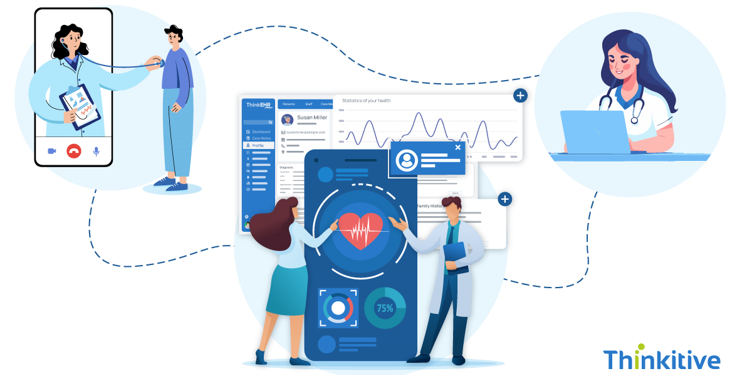
This is a real challenge when you’re running a hybrid clinic. You’re trying to deliver seamless care, but your software is still working in separate lanes. Most traditional EHRs weren’t designed for this level of EHR integration, and it shows.
That’s why so many practices are turning toward customizable EHR systems. With custom EHR software development, clinics can build an EHR that actually supports telehealth from the inside out—so visit notes sync instantly, records stay accurate, and the team isn’t stuck doing double entry.
So the big question is: is investing in a custom EHR setup for telehealth actually worth it?
I’d say yes. And in this blog, I’ll break down why clinics are making this shift and how a more integrated virtual care platform shapes the future of care.
Let’s get into it.
The Inevitability of Telehealth Integration
You know that post-COVID telehealth is no longer replaceable, but now it’s an irreplaceable part of healthcare. Patients have gotten used to the convinience and comfort of remote visits, quick digital check-ins, and getting care without completely rescheduling their entire day. And this is why telehealth integration has become even more important.
On the provider side, telehealth makes their work easier. As there is no need to travel long distances, there are fewer no-shows, smoother follow-ups, and quicker consults, which add up to real efficiency gains.
However, all of these benefits are only possible if your telehealth or virtual care platform connects seamlessly with your EHR. Because, without proper EHR integration, providers end up doing duplicate work, manually updating records, or switching between different screens.
In addition, regulations are also pushing the industry in the same direction, with CPT codes for telemedicine, Medicare expanding coverage, and ongoing policy updates, telemedicine give more financial support.
That’s why more practices are investing in customizable EHR systems and custom healthcare software. When your EHR is truly built around telehealth, integration is not a struggle; it’s the foundation of better care.
Where Off-the-Shelf EHRs Fail Telehealth?
If you ask me, off-the-shelf software is not made to support the kind of real-time connectivity that modern telemedicine solutions need. And this is why these systems fall short, making seamless data exchange and telehealth nearly impossible.
One of the biggest challenges with generic EHRs is data silos. The patient data never syncs with the EHR, as visit notes, CHST messages, and remote assessments stay in telehealth software. Because of the providers’ end up with fragmented records, creating gaps in diagnosis and impacting final outcomes.
Another problem is the misalignment with workflows. Without a proper telehealth integration, clinicians are forced to manually transfer data, copy-paste notes, and upload attachments, while constantly changing screens. And this slows down operations and defeats the whole purpose of offering convenient virtual care.
Furthermore, the limitations of generic EHRs also limit specialty practices as these EHRs can’t support specialty workflows or telehealth-specific needs. Whether it’s managing remote vitals, customizing documentation templates, or automating follow-ups, generic EHRs just don’t adapt to it. When the software can’t adapt, your clinic ends up adapting to the software, costing clinics efficiency.
And this is exactly why, now clinicians are shifting towards customizable EHR platforms and custom healthcare software. With this you can easily design to handle telehealth from the day one creating a seamless data flows, streamline workflows, and you can finally deliver a smooth virtual care experience.
The Power of a Customizable EHR
Well, a customizable EHR makes telehealth integration seamless and reliable. Rather than forcing providers to work around software limitations, a custom system adapts to how your clinic actually operates. Here is how custom EHR software helps you streamline telehealth experience:
- Seamless Telehealth Integration: When you invest in custom EHR software development, telehealth finally becomes part of the patient record not just an add-on platform. Every visit note, remote vitals, chat logs, images, and diagnostic data flow directly into the unified chart the moment the encounter ends. This eliminates the need of manual uploads, and providers get a complete, real-time view of patient profile.
- Tailored Workflows: Every specialty works differently, and a custom EHR helps you customize workflows to match how you work. With this your virtual care platform works the same your clinic does. You can customize templates, forms, routing rules, and telehealth-specific workflows can be designed around your daily processes. This means fewer clicks, faster navigation, and a smoother experience for both the provider and the patient.
- Advanced Interoperability: Modern telehealth requires real interoperability, not just PDFs and manual uploads. A customizable EHR can be built using HL7, FHIR, and flexible API frameworks that connect to labs, imaging centers, billing systems, RPM devices, and third-party telehealth applications. This EHR integration ensures your data moves exactly where it needs to go without extra steps
- Future-Proof Technology: Technology is evolving rapidly including telehealth, AI tools, analytics, and remote monitoring are only getting more advanced. With custom healthcare software, upgrades don’t require a complete overhaul. You can easily add new systems, features, integrations, and scale as your clinic grows. It’s a long-term investment designed to grow right alongside you.
Key Considerations When Integrating Telehealth & EHR
Before integrating your telehealth platform with your EHR, it’s important to understand what truly makes an implementation successful. Clinics often focus on features, but the real difference comes from how secure, scalable, and user-friendly they are.
Here is a quick breakdown of the key considerations that shape a smooth, future-ready integration:
| Consideration | What It Means | Why It Matters |
| Security & HIPAA Compliance | Encrypted video sessions, secure messaging, role-based access, audit logs, and safe data exchange. | Protects PHI, avoids legal issues, and ensures your telehealth integration meets federal standards. |
| User Experience | Streamlined clinician workflows and a clean, intuitive patient portal. | Improves adoption, reduces training time, and keeps both providers and patients engaged. |
| Scalability | Ability to handle more users, more telehealth visits, and expanded features without performance issues. | Ensures your system won’t fall apart as virtual care usage grows. |
| Expert Partnership | Working with experienced healthcare software developers who understand EHR integration and telemedicine data standards. | Prevents data integrity problems and ensures clean, reliable data flow between systems. |
Final Thoughts: Telehealth + Custom EHR = The Future of Care
In a nutshell, telehealth has become the irreplaceable part of healthcare and patients have become used to convinience of remote care. However, most of the clinics still not have a seamless integration between telehealth app and EHR.
That’s where, customizable EHR comes in. With custom software development you can easily and seamlessly integrate telehealth and your EHR with workflows that align with how your clinic work. So, if your telehealth and EHR are working in silos then its time to shift to a custom EHR system.
Click here to connect with our team and book your free consultation today!
Frequently Asked Questions
- What are the primary benefits of integrating telehealth with my EHR system?
Integrating telehealth with your EHR streamlines documentation, keeps patient records unified, and eliminates double data entry. It improves care coordination, reduces workflow bottlenecks, and gives clinicians a complete, real-time view of patient history, making virtual visits just as clinically informed and efficient as in-clinic encounters.
- Is a customizable EHR necessary for seamless telehealth integration?
Not always, but a customizable EHR makes integration far smoother. Off-the-shelf systems rarely match telehealth workflows, leading to silos and manual work. Custom EHR development lets clinics tailor features, automate virtual care processes, and ensure telehealth data flows cleanly into the unified patient chart.
- How does EHR + telehealth integration maintain HIPAA security?
A secure telehealth–EHR setup uses encrypted video, secure messaging, role-based access controls, audit trails, and strict data-handling policies. When built properly, the integration ensures PHI moves only through HIPAA-compliant channels, protecting patient data across virtual visits, EHR updates, and provider communication.
- What challenges occur when syncing telehealth data with EHR platforms?
Common issues include mismatched data formats, duplicate entries, incomplete visit notes, and inconsistent clinical documentation. Off-the-shelf EHRs often lack the APIs needed for clean synchronization, leading to workflow disruptions. A well-planned integration ensures accurate data mapping and smooth information flow.
- How long does it take to integrate a customizable EHR with a telehealth platform?
Integration timelines vary based on system complexity, APIs, and required features. Most clinics complete a basic integration in 6–12 weeks, while advanced workflows, custom modules, or specialty needs may take a few months. Working with experienced healthcare software developers speeds up the process and prevents rework.