Understanding Power Conversion: How to Convert Horsepower to Kilowatts
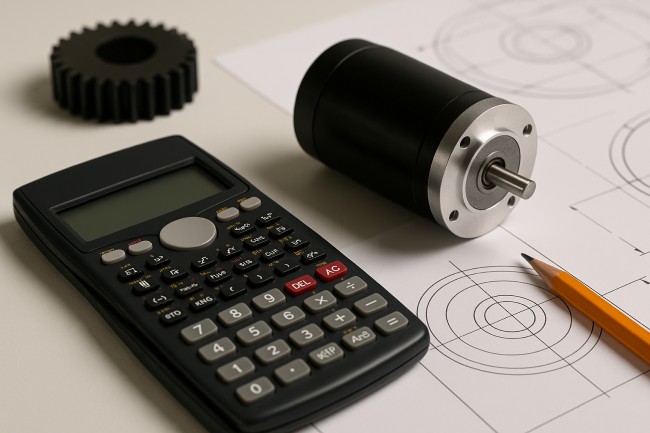
When it comes to all manner of engineering, manufacturing, and everyday machinery applications, power is a fundamental concept.
Whether you’re specifying a new electric motor for a factory, or perhaps troubleshooting a pump in a water treatment plant, there are two key units of power that you are likely to encounter: horsepower (hp) and kilowatts (kW).
A Quick Introduction to Horsepower
It was the Scottish engineer James Watt (1736-1819) who invented horsepower to market his steam engines. He calculated it based on the power of a strong horse lifting coal – approximately the ability to raise 33,000 pounds by one foot in one minute. This is equivalent to lifting 550 pounds one foot per second, or around 746 watts in electrical terms.
Today, horsepower continues to be a staple in the automotive, aviation, and mechanical sectors, particularly where imperial measurements are still used.
A bit of confusion can sometimes arise in relation to the different variants of horsepower that exist. As well as imperial horsepower (also sometimes referred to as “mechanical” horsepower), there are metric horsepower (PS or cv) and electrical horsepower (hpE).
For most industrial applications in the UK, it is primarily imperial (or mechanical) horsepower that is typically used, equal to 745.7 watts. By comparison, metric horsepower is slightly lower than this, at 735.5 watts.
So, for simplicity’s sake, we will be referencing imperial horsepower for the rest of this article.
A Quick Introduction to Kilowatts
Kilowatts, on the other hand, are part of the metric system. They are the go-to unit for electrical power in the UK and across Europe. One kilowatt (kW) is 1,000 watts (W), representing the rate at which 1,000 joules of energy are transferred per second.
This unit of measurement is widely seen across applications ranging from household appliances to large-scale renewables.
With the UK having shifted towards metric standards over recent decades, kilowatts are the favoured choice for energy efficiency ratings, electrical installations, and compliance with the Electricity at Work Regulations 1999.
How Do You Convert Horsepower to Kilowatts?
There are various situations in which this particular conversion may be needed. It can be required for the purposes of international collaboration, for instance, such as when UK engineers work with global suppliers or standards.
This conversion can certainly often be necessary for equipment sourcing. An engineer may be browsing suppliers’ catalogues, and they might see motors listed in hp, but they may require kW for installation specs.
So, with no further ado, here is the standard conversion formula such engineers will need to use: kW = hp x 0.7457. To give an example using 5 hp (a common small motor rating), the relevant calculation would be 5 x 0.7457 = 3.7285, or approximately 3.73 kW.
Calculations using this formula can, of course, be performed manually. However, if you can find a horsepower-to-kilowatts conversion calculator online, this can help speed up the process, while also allowing you to verify the accuracy of your manual workings-out.
What About Working Out Motor Efficiency?
The metric of motor efficiency tells you how much of the electrical energy supplied to a motor becomes useful mechanical power. The higher the efficiency is for any given application, the more this will translate to lower running costs and less wasted heat.
You can calculate motor efficiency using the horsepower to kilowatt conversion calculator on the website of electrical component supplier RS, by first performing any hp-to-kW conversion that your application requires, before then using the formula: Efficiency (%) = (Mechanical output power / Electrical input power) x 100.
So, for instance, if a given motor outputs 7.46 kW (converted from 10 hp) and draws 8.5 kW electrically, the efficiency calculation would be: Efficiency (%) = (7.46 / 8.5) x 100 ≈ 87.8%.
Feel free to bookmark this article to give yourself a handy reference for when you might next need to perform horsepower-to-kilowatt and motor efficiency calculations!